

Table of Contents
- Why Patience Matters in Driving Instruction
- Step 1: Check Instructor Credentials and Certification
- Step 2: Ask These Driving Instructor Interview Questions
- Step 3: How to Prepare for Your First Driving Lesson
- Step 4: Driving Anxiety Tips for New Drivers
- Step 5: Book a Trial Lesson and Evaluate the Fit
- Red Flags to Avoid When Choosing Patient Driving Instructors
- Frequently Asked Questions
Last Updated: September 30, 2026
Why Patience Matters in Driving Instruction
Learning to drive is stressful, and the instructor sitting beside you shapes whether that stress fades or grows. For anxious learners, a calm teacher often matters more than a cheap hourly rate. Choosing the wrong person can stall your progress for months.
Patient driving instructors are certified professionals who adjust their pace, tone, and teaching method to match each learner’s comfort level. They don’t rush, they don’t shout, and they treat every mistake as a teaching moment.
Central Driving Academy sees this every week across Coquitlam, Port Coquitlam, and Port Moody. Nervous beginners who feel rushed quit. Ones who feel supported keep going.
The Insurance Corporation of British Columbia (ICBC) sets the licensing standards every instructor and learner must follow in this province. Knowing those standards helps you judge whether an instructor is the real deal.
Here’s what most guides get wrong: they tell you to check a license and stop there. A license proves someone passed a test. It says nothing about whether they’ll stay calm when you stall on a hill for the fourth time.
Below, we’ll walk through five steps to find a patient instructor, plus the red flags that should send you running.
Step 1: Check Instructor Credentials and Certification
Start with the paperwork before you book anything. A patient instructor still needs to be a qualified one.
Ask these questions up front:
- Are you certified under the Motor Vehicle Act?
- Which driving school are you registered with?
- How long have you been teaching?
- Do you carry a valid instructor’s license?
A legitimate instructor will answer without hesitation. Someone who dodges the question is telling you something. In practice, the best teachers volunteer this information before you ask.
Central Driving Academy instructors are certified under the Motor Vehicle Act, and we’re happy to show credentials on request. That transparency is the baseline, not a bonus.
Ask for the instructor’s certification number and the name of their supervising school. Legitimate instructors keep this on hand. If they fumble for it, that’s your first red flag.
Step 2: Ask These Driving Instructor Interview Questions
A short phone call before you book saves you weeks of frustration. Use it to find out how the instructor actually teaches, and to hear how they talk about learners who struggle.
Try these driving instructor interview questions, grouped by what they reveal:
On handling repeated mistakes
- “Walk me through what you do when a learner makes the same error three lessons in a row.”
- “Can you give me a recent example of a student who plateaued and how you adjusted?”
On anxious or nervous drivers
- “What’s your approach with a learner who freezes at a busy intersection?”
- “How do you decide when to push forward and when to back off?”
On lesson structure
- “Can you describe a lesson plan for a complete beginner, start to finish?”
- “How do you give feedback during a lesson, in the moment or after?”
On logistics and boundaries
- “What happens if I need to reschedule, and how much notice do you need?”
- “Do you use a dual-control vehicle, and do you check it before each lesson?”
Listen for specifics. “I’m very patient” is not an answer. “I break each skill into small steps and we don’t move on until you’re comfortable” is. A useful follow-up when an answer stays vague: “Can you give me an example from the last month?” Instructors who teach regularly can produce one; instructors who are reciting a script usually can’t.
Record the answers in your phone notes right after the call. Patterns across two or three instructors become obvious when you compare what each one actually said, not just how friendly they sounded.
Watch for instructors who blame past students for failing. A teacher who calls former learners “hopeless” will likely say the same about you. That mindset shows up behind the wheel.
If you’re a neurodivergent learner, ADHD, autism, or severe driving anxiety, add one more question: “Have you adapted lessons for students who need very literal, step-by-step instructions and predictable routines?” Most general guides skip this entirely, but the answer tells you more about fit than any review score. An instructor who has done it will describe specific adjustments, such as writing out a route in advance or narrating each action before it happens.
Step 3: How to Prepare for Your First Driving Lesson
Showing up ready makes your first lesson smoother and helps you judge your instructor fairly. Here’s how to prepare for your first driving lesson.
Before you get in the car:
- Bring your learner’s license and any required documents
- Wear comfortable flat shoes, not sandals or heels
- Review basic road signs and driving theory
- Write down two or three questions you want answered
- Eat something light so you’re not distracted
Know the car’s basic controls before you start. Ask your instructor to walk you through the pedals, mirrors, and signals. A patient teacher will do this without making you feel silly.
According to ICBC’s official driving guides, new drivers should expect a gradual progression from quiet roads to busier ones.
Step 4: Driving Anxiety Tips for New Drivers
Nerves are normal, and they don’t mean you’re bad at driving. These driving anxiety tips for new drivers can help you stay calm behind the wheel.
Try these approaches:
- Breathe slowly and deliberately before you start the car
- Tell your instructor you’re nervous, so they can adjust
- Break each lesson into one small goal
- Practice in quiet areas before busy intersections
- Remind yourself that every driver started here
The best driving lesson is one where you feel slightly challenged but never overwhelmed. If you’re panicking the whole time, the pace is wrong, not you.
Step 5: Book a Trial Lesson and Evaluate the Fit
A single trial lesson tells you more than ten reviews. Book one before you commit to a package.
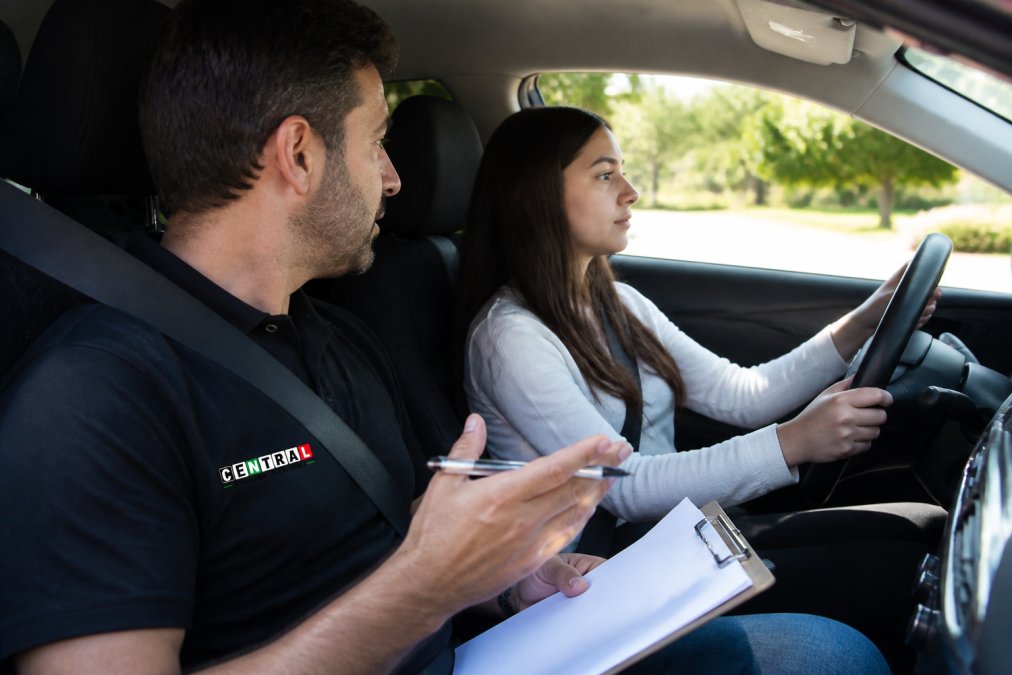
During the lesson, watch for these signals:
| What to Watch | Good Sign | Warning Sign |
|---|---|---|
| Tone of voice | Calm, steady | Sharp or sarcastic |
| Feedback style | Specific and kind | Vague or harsh |
| Pacing | Matches your comfort | Rushes you forward |
| Questions | Asks how you feel | Ignores your input |
| Dual-control vehicle | Present and checked | Missing or unclear |
Red Flags to Avoid When Choosing Patient Driving Instructors
Walk away if an instructor:
- Yells, sighs, or makes sarcastic comments about your driving
- Grabs the wheel or pedals without warning or explanation
- Refuses to explain why something went wrong
- Pressures you into buying a large package on day one
- Won’t share certification details or the name of their supervising school
- Shows up late, distracted, or on their phone
- Skips the dual-control vehicle check before you drive
- Talks over you when you ask a question
- Changes the lesson plan mid-drive without telling you why
Never continue lessons with an instructor who makes you feel stupid. Anxiety behind the wheel is a safety risk, not a character flaw. A patient instructor knows the difference.
Using a trial lesson as a test, not a formality
| What to Watch | Good Sign | Warning Sign |
|---|---|---|
| Tone of voice | Calm, steady | Sharp or sarcastic |
| Feedback style | Specific and kind | Vague or harsh |
| Pacing | Matches your comfort | Rushes you forward |
| Questions | Asks how you feel | Ignores your input |
| Dual-control vehicle | Present and checked | Missing or unclear |
| Explanations | Says why, not just what | Corrects without context |
A patient instructor isn’t the one who never corrects you. It’s the one who corrects you in a way that makes the next attempt easier. If a lesson leaves you more confused or more afraid than before, that’s your red flag, regardless of how many years the instructor has been teaching.
Frequently Asked Questions
What qualities should I look for in a patient driving instructor?
Look for a calm tone, clear explanations, and a willingness to repeat instructions without frustration. A patient instructor will adjust their teaching pace to your comfort level, use positive reinforcement, and never rush you through maneuvers. They should also be certified under the Motor Vehicle Act and have experience with anxious learners. During your first meeting, pay attention to whether they listen more than they talk, and whether they make you feel at ease behind the wheel.
How can I verify if a driving instructor is certified under the Motor Vehicle Act?
Ask the driving school for proof of their instructors’ certification. In British Columbia, all driving instructors must be licensed by ICBC and meet the requirements set out in the Motor Vehicle Act. You can request to see their instructor license number and verify it with ICBC directly. A legitimate school will happily provide this information. If they hesitate or cannot produce credentials, that is a major red flag. Always confirm before booking your first lesson.
What should I ask a driving school before booking my first lesson?
Ask about the instructor’s experience with anxious or nervous drivers, how they handle mistakes during lessons, and whether they offer a trial lesson. Inquire about the lesson structure, pickup and drop-off policies, and if they provide a vehicle for the ICBC road test. Also ask about their cancellation policy and if you can switch instructors if the fit isn’t right. These questions help you gauge whether the school prioritizes patient, student-centered learning. For a full list, see our interview questions section above.
Can I switch driving instructors if I don’t feel comfortable?
Yes, you can and should switch if you feel uncomfortable or if the instructor’s teaching style doesn’t suit you. A reputable driving school will accommodate your request without making you feel guilty. Before booking, ask about their policy on switching instructors. Central Driving Academy, for example, allows students to request a different instructor if needed. Your comfort and safety are paramount, so never stay with an instructor who makes you feel stressed or rushed.
Finding the right instructor takes a little homework, and it’s worth every minute. Central Driving Academy offers certified instruction under the Motor Vehicle Act, bilingual lessons in English and Farsi, flexible six-day scheduling, and a free in-person assessment to start. Get started with Central Driving Academy and build the driving confidence you’ve been waiting for.