Table of Contents
- What Beginner Driving Lessons in Port Moody Actually Cover
- The ICBC Licensing Roadmap for New Drivers
- How to Find Patient Driving Instructors
- ICBC Road Test Preparation: What Sets a Good Program Apart
- Lesson Packages, Hourly Rates, and What Affects Pricing
- Managing Anxiety Behind the Wheel
- Frequently Asked Questions
Last Updated: September 16, 2026
What Beginner Driving Lessons in Port Moody Actually Cover
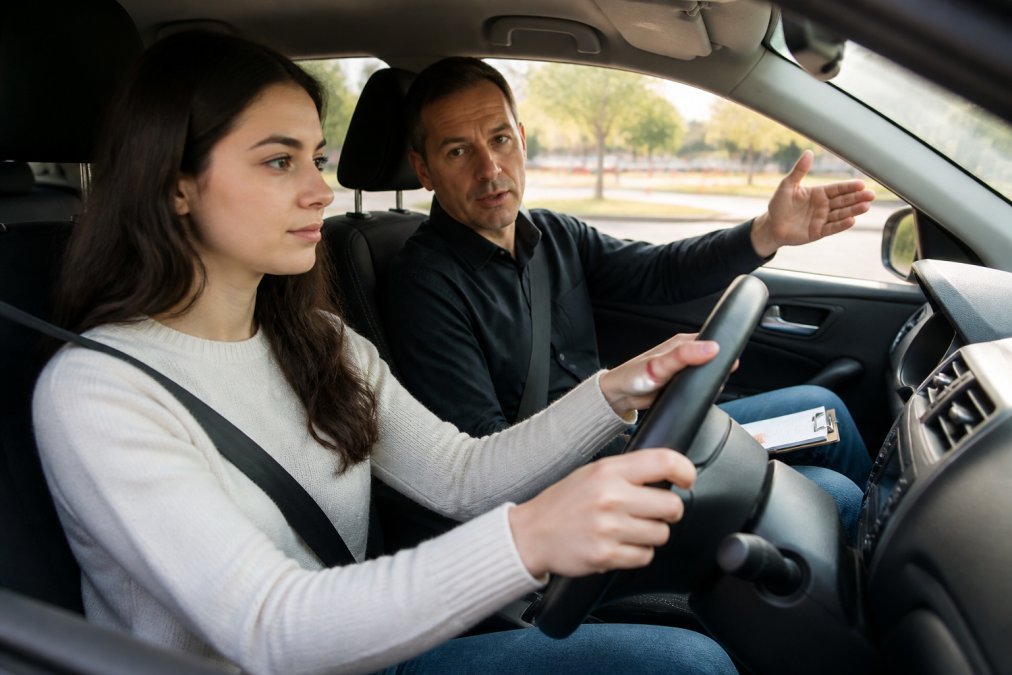
Beginner driving lessons in Port Moody are structured, behind-the-wheel training sessions that take a new driver from their first time in the driver’s seat to being ready for the ICBC road test. The first lesson usually starts with vehicle control and steering basics, then moves into traffic laws, road safety, and hazard perception as confidence builds.
Most learners arrive with the same quiet worry: that lessons are just driving around until the hour runs out. A good program does the opposite. It follows a curriculum with a defined order, so each session adds one skill on top of the last.
Behind-the-Wheel Training and Vehicle Control
Vehicle control is the foundation everything else sits on. Before a new driver touches a busy road, they need to handle the car smoothly: steering technique, braking without jerking, accelerating at a steady rate, and judging the car’s position in a lane.
A common mistake is rushing this stage. Learners who skip smooth braking and steering practice tend to struggle later with parallel parking and lane changing, because both depend on precise control at low speed. Expect the first sessions to focus on quiet residential streets, where there’s room to make mistakes without pressure.
Traffic Laws and Road Safety Fundamentals
Traffic laws and road safety fundamentals cover the rules a driver must follow, from right of way at intersections to how to read traffic signs and signals correctly. This isn’t just theory for a written test. Instructors connect each rule to a real situation, so the learner understands why the rule exists and when it applies.
Intersection safety gets heavy attention here, since intersections are where right-of-way decisions matter most. Highway driving and emergency maneuvers come later, once the basics are solid. The ICBC driving guides and licensing resources are the reference point for what’s expected, and a good instructor will walk through them with you rather than just handing over a booklet.
The ICBC Licensing Roadmap for New Drivers
Most driving-school pages sell lessons without ever explaining how the licensing system actually works. That’s backwards. Understanding the roadmap first tells you when to book lessons, how many supervised hours to aim for, and what each stage unlocks. ICBC runs a graduated licensing program (GLP) with three stages, and every lesson you take should map to one of them.
Here is the full sequence, from your first written test to a full privilege license.
Stage 1: Class 7 Learner (L)
The entry point is the Class 7 learner’s license. To get it you must:
- Be at least 16 years old.
- Pass the ICBC knowledge test (the written exam on rules, signs, and safe driving).
- Meet vision and medical fitness requirements.
- Have a qualified supervisor sign off, a person at least 25 years old with a valid full-privilege license.
Once you hold the L, you enter the supervised driving phase. You must drive with a qualified supervisor in the passenger seat at all times, display the red L sign on the rear of the vehicle, and stay within the GLP restrictions (no driving between midnight and 5 a.m. unless accompanied by your supervisor, no passengers beyond your supervisor, and zero alcohol).
The L stage lasts a minimum of 12 months. If you complete an ICBC-approved driver training course, that minimum drops to 9 months, one of the clearest reasons to start lessons early rather than cramming them before the road test.
Stage 2: Class 7 Novice (N)
After at least 12 months (or 9 with approved training) and a clean driving record, you can take the Class 7 road test. Pass it and you move to the novice stage.
As an N driver you can drive alone, but the restrictions stay meaningful:
- Display the green N sign on the rear of the vehicle.
- Zero alcohol, no exceptions.
- Only one passenger, unless a qualified supervisor is in the front seat (immediate family members are exempt from the passenger limit).
- No driving between midnight and 5 a.m.
The N stage lasts a minimum of 24 months. During that time, any driving prohibition restarts the clock, so a clean record matters.
Stage 3: Class 5 Full Privilege
After 24 months as an N driver with a clean record, you take the Class 5 road test. Pass it and the restrictions fall away, you can drive at any hour, carry as many passengers as the vehicle allows, and the L or N sign comes off for good.
Why the Roadmap Matters for Booking Lessons
A common pattern among new drivers is to treat lessons as a single block squeezed in right before the road test.
Ask any school to show you how their lesson plan lines up with the L, N, and Class 5 stages. The answer tells you whether you’re buying a curriculum or just hours.
Because ICBC sets the rules and can update fees, wait times, and requirements, always confirm current details on the ICBC licensing page before you book a test or a package.
How to Find Patient Driving Instructors
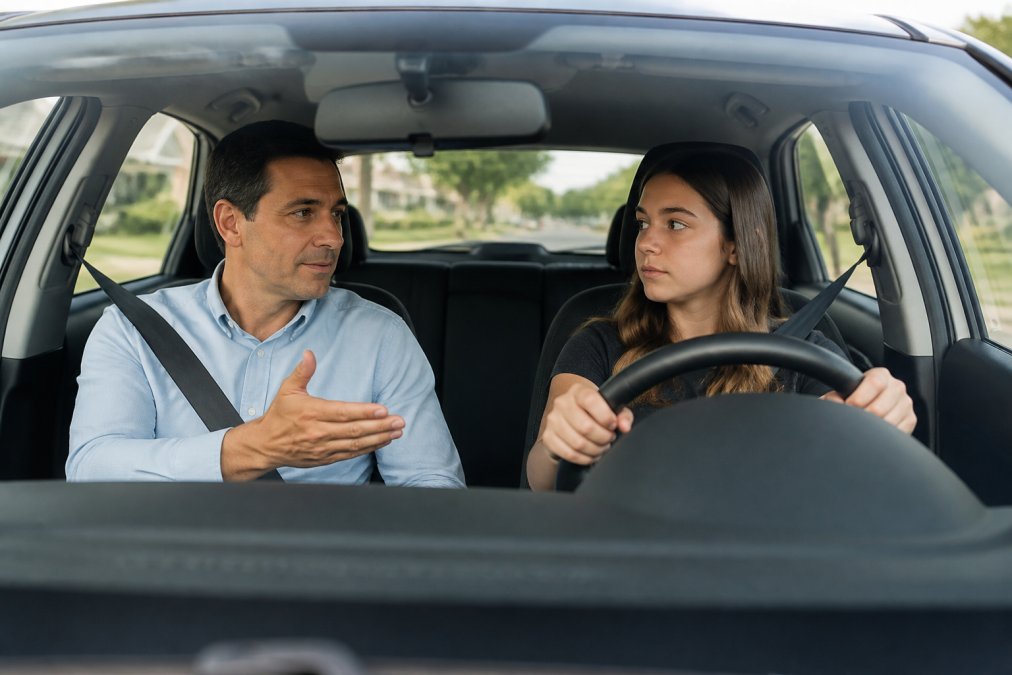
Here’s what to check before you book:
- Certification: Confirm the instructor is certified under the Motor Vehicle Act and can show credentials.
- Bilingual support: If English isn’t your first language, ask whether instruction is available in your language. Central Driving Academy teaches in both English and Farsi, which removes a real barrier for many newcomers.
- Trial or assessment: A free in-person assessment lets you meet the instructor before committing to a package.
- Reviews: Look for feedback that mentions patience specifically, not just pass rates.
Ask the instructor directly how they handle mistakes during a lesson. A patient instructor will describe a calm correction; a rushed one will change the subject. The answer tells you more than any review.
ICBC Road Test Preparation: What Sets a Good Program Apart
ICBC road test preparation is the phase where lessons shift from learning skills to performing them under test conditions.
Mock Road Tests and Hazard Perception Practice
| Preparation Step | What It Builds | When to Do It |
|---|---|---|
| Vehicle control drills | Smooth steering and braking | First lessons |
| Traffic law review | Correct right-of-way decisions | Early to mid training |
| Hazard perception practice | Early risk spotting | Mid training |
| Mock road test | Test-format familiarity | Final weeks |
| Road test vehicle booking | Test-day readiness | Before test date |
Lesson Packages, Hourly Rates, and What Affects Pricing
Pricing for beginner lessons is not a single number, it’s a structure, and understanding that structure is the difference between a fair deal and an expensive surprise.
The Three Common Package Formats
Single hourly lessons. The most flexible and usually the highest per-hour rate.
What Actually Drives the Cost
Four factors move the price more than anything else:
- Number of hours bundled. The single biggest lever. More hours, lower per-hour rate.
- Pick-up and drop-off. Some schools include door-to-door service; others charge extra or require you to meet at a fixed location.
- Road test vehicle. Using the school’s ICBC-compliant car on test day is a separate line item at many schools. Confirm whether it’s included.
- Instructor language and specialization. Instruction in a second language, or coaching for a specific test center, can carry a premium.
The Value Trap to Watch For
The lowest hourly rate is rarely the lowest total cost.
How to Compare Quotes Properly
- What’s the total cost for the number of hours I’ll realistically need?
- Is pick-up and drop-off included?
- Is a road test vehicle included, and is it ICBC-compliant?
- Is there a free assessment before I commit?
Don’t judge a school on hourly rate alone. A low rate with no test vehicle and no assessment often ends up costing more once you add the extras you’ll need anyway.
Because rates change and vary by provider, the only reliable way to get current numbers is to ask directly, and to ask for the total, not the hourly.
Managing Anxiety Behind the Wheel
A practical routine that helps:
- Start each lesson on quiet streets before moving to busier roads.
- Break hard skills like parallel parking into smaller steps.
- Practice the same route more than once to build predictability.
- Tell your instructor what makes you nervous, so they can adjust.
Frequently Asked Questions
How many driving lessons does a beginner need to pass the ICBC road test?
There is no fixed number, but most beginners need 10 to 20 hours of behind-the-wheel training before they feel ready. The right amount depends on how much practice you get outside lessons, how quickly you build vehicle control, and how comfortable you are with hazard perception and lane changing. A licensed driving school can assess your starting point and recommend a realistic lesson plan.
What should I look for when choosing a driving school for a beginner?
Look for provincially approved instructors with certification under the Motor Vehicle Act, a structured driving curriculum that covers vehicle control through highway driving, and a track record of student pass rates. Ask whether the school offers a free assessment, a mock road test, and a vehicle for the ICBC exam. Patient instruction matters most for nervous beginners, so read reviews that mention teaching style, not just price.
Are there bilingual driving instructors available for beginners?
Yes. Some driving schools in the Tri-Cities area offer instruction in both English and Farsi, which helps newcomers and international students understand driving terminology, traffic signs, and right-of-way rules without a language barrier. If English is not your first language, confirm the school can match you with a bilingual instructor before you book.
Do driving schools provide vehicles for the ICBC road test?
Many driving schools provide a road-test-ready vehicle as part of their lesson packages. This matters if your own car does not meet ICBC requirements or if you do not have access to a vehicle on test day. Confirm what the school includes, how the vehicle is insured, and whether the instructor will meet you at the test center.
Learning to drive in the Tri-Cities area shouldn’t feel like a gamble on whether your instructor will be patient with you. Central Driving Academy offers certified instructors, bilingual instruction in English and Farsi, flexible six-day scheduling, and a road test vehicle provided for your ICBC test, all built around helping nervous beginners become confident drivers. Get started with Central Driving Academy and book your free in-person assessment today.