

Last Updated: November 5, 2026
Quick Summary
Private driving lessons give nervous drivers one-on-one attention, a steady pace and an instructor who adjusts to their fears. Unlike group classes, the lesson follows the learner, so anxious students can build confidence without rushed pressure or divided focus.
- Private lessons give the learner the instructor’s full focus, with every minute spent on their own driving.
- Instructors can move to quieter streets and return to busier roads only when the student is ready.
- Use slow breathing at natural pauses and the 5-4-3-2-1 grounding method during lessons.
- Agree on a simple signal such as “I need a minute” before the lesson starts.
- Track progress by rating confidence from 1 to 10 before and after each lesson.
Table of Contents
- Why Nervous Drivers Struggle in Group or Rushed Lessons
- One-on-One Attention That Adapts to Your Fears
- Learning at Your Own Pace With Patient, Supportive Instruction
- Driving Anxiety Tips You Can Use Before, During, and After a Lesson
- Driving Lessons for Anxious Adults: A Gradual Exposure Roadmap
- Refresher Driving Lessons for Returning Drivers and Failed Road Tests
- Measuring Progress, Costs, and Booking Your First Private Lesson
- Frequently Asked Questions
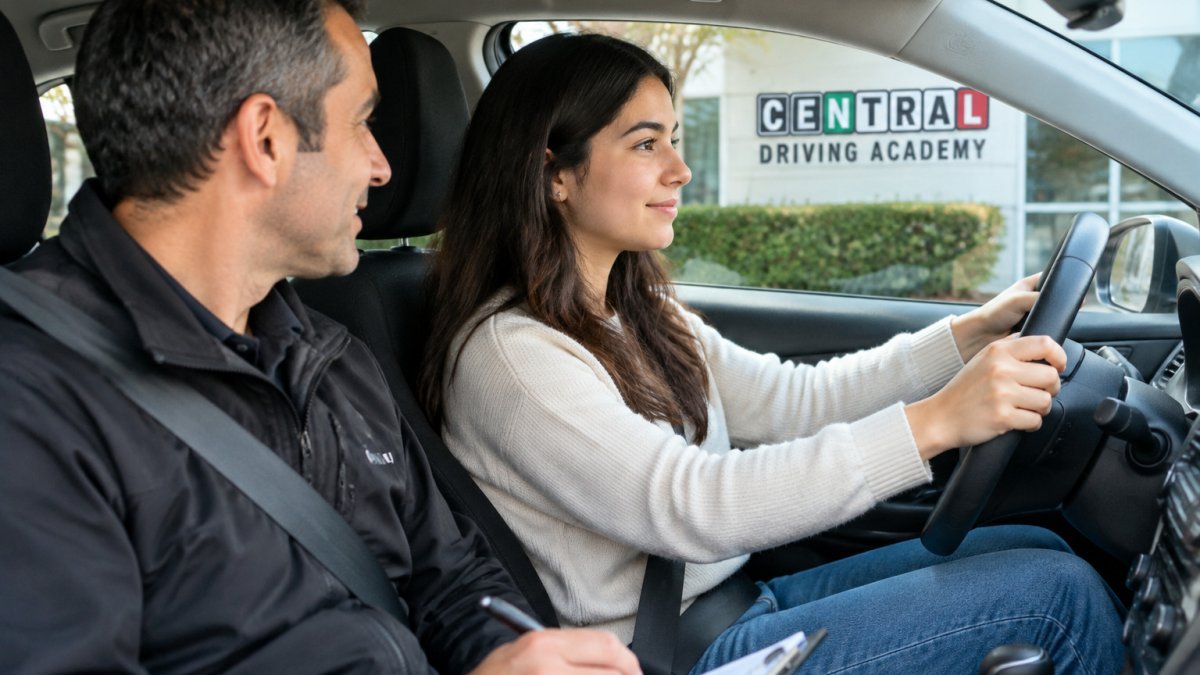
Nervous drivers often find that group classes and rushed lessons make the problem worse. Private driving lessons give anxious learners one-on-one attention, a steady pace and an instructor who adjusts to their fears. At Central Driving Academy, our instructors work with beginners across Coquitlam, Port Coquitlam and Port Moody to build a calm, personal approach to learning. Below, we explain why private lessons suit nervous drivers, what to expect, and how to start.
Why Nervous Drivers Struggle in Group or Rushed Lessons
A nervous driver needs time to process what is happening on the road. For a look at the instructor’s side of rushed lessons, see why driving instructors seem impatient. In a group setting or a rushed lesson, the instructor’s attention is divided, and the pace rarely matches the learner’s comfort level. A common mistake is assuming that more lessons in less time will build skill faster. For anxious learners, the opposite often happens. Pressure rises, mistakes pile up, and the fear that brought them in gets stronger.
Private lessons remove most of these pressures. The learner has the instructor’s full focus, and every minute is spent on their own driving.
One-on-One Attention That Adapts to Your Fears
With a private instructor, the lesson follows the learner rather than a fixed script. If a student freezes at intersections, the instructor can move to quieter streets and return to busier roads only when the student is ready. If the learner is anxious about highway merging, that skill can be practiced separately, at a speed the learner sets.
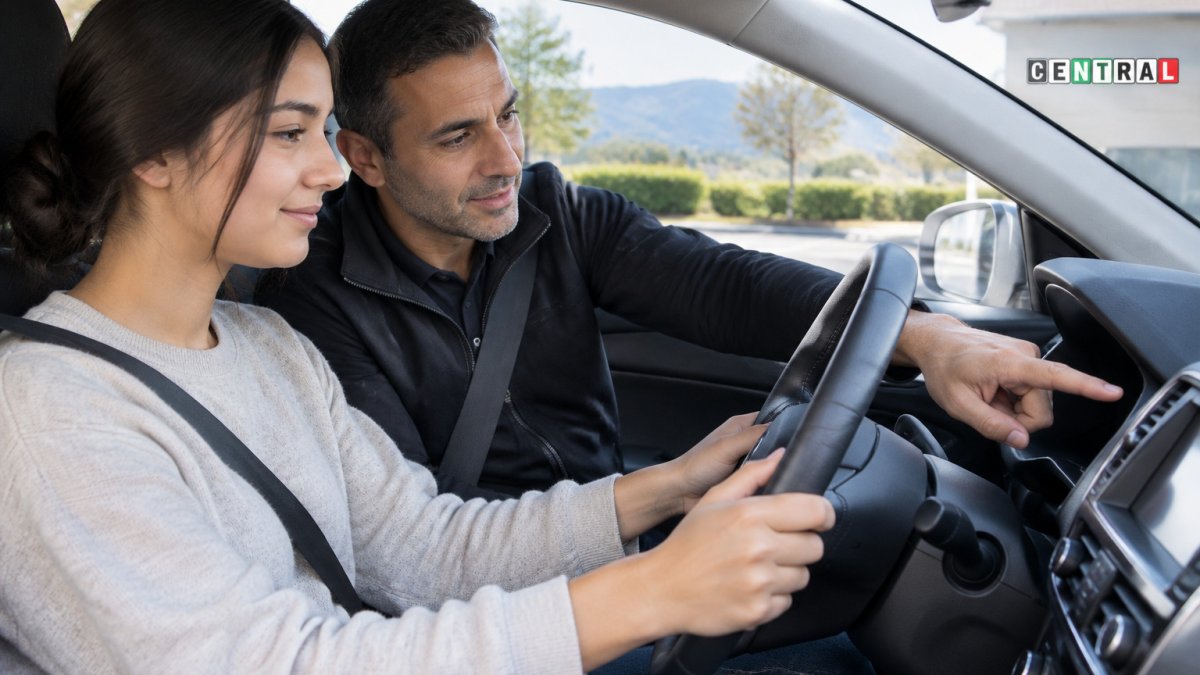
This kind of adjustment is hard to deliver in a group. It is the core advantage of private instruction for anyone who gets nervous behind the wheel.
Learning at Your Own Pace With Patient, Supportive Instruction
Patience matters more than speed for a nervous driver. A good private instructor explains each step before asking the learner to attempt it, demonstrates when needed, and gives feedback that is specific and calm. Learners are not rushed from one skill to the next.
Confidence can grow from small, repeated successes rather than from a single high-pressure moment.
Driving Anxiety Tips You Can Use Before, During, and After a Lesson
Anxiety does not stop when the lesson ends, so a simple, repeatable routine helps more than vague encouragement. The goal is not to eliminate nerves but to keep them at a level where learning can happen. A structured before-during-after routine can be more helpful than vague encouragement to “just relax.”
Before the lesson. Arrive rested and a few minutes early so you are not hurrying, rushing into the driver’s seat raises your baseline anxiety before you have even started. Eat something light and avoid too much caffeine, which can mimic the physical signs of panic. Write down the one or two things that worry you most and hand that note to your instructor; naming a fear out loud reduces its power and lets the instructor plan around it.
During the lesson. Use slow breathing at natural pauses, stop signs, red lights, parking lot staging areas, rather than trying to breathe through a busy intersection. A simple grounding technique is the 5-4-3-2-1 method: silently name five things you can see, four you can touch, three you can hear, two you can smell, and one you can taste. This pulls attention away from catastrophic thoughts and back to the present road. If you feel overwhelmed, say so out loud and ask to pull over safely; a good instructor will treat this as normal, not as failure.
Watch out: If you try to push through a spike in anxiety without telling your instructor, you may make a sudden correction or freeze at the wheel, which is more dangerous than pausing. Agree on a simple signal, such as “I need a minute,” before the lesson starts.
After the lesson. Write down one thing that went well and one thing you want to work on next time. This habit makes progress visible. Review those notes with your instructor at the start of the next session so the lesson picks up where you left off. You can read more about how to overcome driving anxiety as a beginner in a dedicated guide.
If anxiety becomes overwhelming mid-lesson. Pull over only when it is safe to do so, put the vehicle in park, and tell your instructor what is happening. You can resume the same skill, switch to a quieter street, or end the session early, none of these is a setback. Ending a lesson calmly and on your own terms builds more confidence than forcing through a session that leaves you shaken.
The routine below breaks anxiety management into three stages you can repeat each time you drive.
| Stage | What to do | Why it helps |
|---|---|---|
| Before the lesson | Arrive rested and a few minutes early | Avoids rushing into the seat |
| Before the lesson | Write down your top one or two worries | Naming fears reduces their power |
| During the lesson | Use slow breathing at natural pauses | Calms you without distracting from traffic |
| During the lesson | Try the 5-4-3-2-1 grounding method | Pulls attention back to the present road |
| During the lesson | Agree on a signal such as “I need a minute” | Prevents sudden corrections or freezing |
| After the lesson | Note one success and one goal for next time | Makes progress visible |
| If overwhelmed | Pull over safely, park, and tell your instructor | Ending calmly builds confidence |
Driving Lessons for Anxious Adults: A Gradual Exposure Roadmap
Adults who have avoided driving for years often need a gradual plan. A typical roadmap starts in an empty parking lot, moves to residential streets, then introduces light traffic, and finally tackles busier roads and highways. Each stage should be repeated until the learner feels settled before moving on.
This approach works because it builds familiarity step by step. Private lessons make it easier to follow, since the instructor can hold the learner at one stage for as long as needed. For nervous adults considering their options, our private driving lessons compared with group classes guide explains how the formats differ.
Refresher Driving Lessons for Returning Drivers and Failed Road Tests
Some learners are not beginners at all. They may have a licence that lapsed, years away from driving, or a failed road test they are afraid to retake. Refresher lessons focus on rebuilding skills and confidence without repeating material the driver already knows.
After a failed test, a useful first step is to identify the specific errors noted on the test report and practice those first. A private instructor can build a session around those weak points, then simulate test conditions. Learners who want to see how a private lesson with pickup works in practice can review our step-by-step guide to private lessons with pickup.
Measuring Progress, Costs, and Booking Your First Private Lesson
Progress in driving is rarely a straight line. A realistic expectation is that some lessons will feel like setbacks even when the learner is improving. Instead of judging each session by how calm you felt, track concrete signs: fewer hesitations at intersections, smoother lane changes, less tension in your grip on the wheel, and a shorter recovery time after a mistake. A simple way to measure progress is to rate your confidence from 1 to 10 before and after each lesson and note which specific skill you practiced. Over four to six lessons, most learners see the ratings trend upward even when individual sessions feel uneven.
Set milestones rather than deadlines. A common progression is: comfortable starting and stopping in an empty lot; managing residential streets with parked cars; handling light traffic and four-way stops; merging and lane changes on busier roads; and finally highway entry and independent driving. Anxiety may not disappear quickly, and that is normal, the goal is to function safely alongside it, not to wait until you feel fearless before driving.
Costs and lesson length. Private lesson pricing depends on lesson format, length and scheduling. When comparing options, ask three questions: what is included in the hourly rate (vehicle, insurance, pickup, road-test preparation), whether the instructor specializes in anxious learners, and whether you can switch instructors without penalty. For current prices, contact Central Driving Academy directly through our website, as pricing depends on lesson format, length and scheduling.
Choosing an instructor who is a good fit. Before booking, ask how many anxious learners the instructor has worked with, how they structure a first lesson, and what they do if a student panics.
To start, book your first private lesson with Central Driving Academy and tell your instructor about your concerns from the first session. Learning to drive with patience and support is entirely possible, and the right private instruction can make the process far less stressful.
Frequently Asked Questions
Are private driving lessons better for nervous drivers?
For many nervous drivers, yes. A private lesson removes the pressure of other students, lets the instructor match the pace to your comfort level, and keeps the focus on one set of skills at a time. Group settings can feel rushed or exposing, while private lessons let you ask questions, pause, and repeat a manoeuvre until it feels routine. Choosing an instructor who explains each step before asking you to act is often the biggest difference.
How can driving lessons help with driving anxiety?
Lessons help by replacing unknowns with routine. Starting in quiet areas such as empty parking lots and residential streets, then moving to busier roads as skills improve, lets your confidence grow in stages. An instructor can also demonstrate manoeuvres, narrate what they are watching for, and reassure you during tense moments. Over several sessions, repeated safe experiences tend to reduce the fear response that made driving feel dangerous.
Can I take driving lessons if I have not driven in years?
Yes. Refresher driving lessons are designed for returning drivers, including adults who have not driven for a long time and people who have failed an ICBC road test. Ask the instructor to assess your current level in the first session so the lessons focus on your actual gaps.
What should I tell my driving instructor if I feel nervous?
Tell your instructor exactly what triggers your anxiety, whether that is merging, left turns, highway speeds, or being watched. Also mention any signs you notice, such as a tight chest or freezing at the wheel, and agree on a signal you can use to ask for a pause. A good instructor will adjust the route, slow the lesson, or stop and talk through the situation before continuing.
Start your private lessons with Central Driving Academy, where patient, professional instruction in English and Farsi helps nervous learners build real confidence on the road.
