


Table of Contents
- Why Defensive Driving Courses Are Worth It for Seniors
- What a Senior Driving Refresher Course Actually Covers
- How a Driving Assessment for Seniors Reveals Hidden Habits
- Defensive Driving Techniques for Older Drivers That Make a Difference
- Can a Senior Driving Course Insurance Discount Lower Your Premium?
- How Defensive Driving Courses Build Confidence for Anxious Senior Drivers
- What to Look for in a Defensive Driving Instructor
- Frequently Asked Questions
Last Updated: October 15, 2026
Why Defensive Driving Courses Are Worth It for Seniors
Defensive driving courses are structured training programs that teach drivers how to anticipate hazards, manage risk, and react calmly to other people’s mistakes on the road. For seniors, they offer a practical way to stay sharp, stay insured, and stay independent.
The reasons to take one go well beyond a certificate. Insurance providers in British Columbia recognize approved training, and the skills carry over to every drive you take. Below, we break down what these courses cover, how an assessment works, and why so many older drivers finish feeling more confident than they have in years.
What a Senior Driving Refresher Course Actually Covers
A senior driving refresher course is a short, focused program that rebuilds the core skills aging drivers use most: scanning, spacing, and smooth control. It is not a beginner’s lesson repeated slowly. It is a tune-up.
Most refresher sessions cover:
- Mirror and shoulder-check routines that catch blind-spot drift
- Following distance that accounts for slower reaction time
- Merging, lane changes, and left turns at busy intersections
- Night driving and low-light visibility
- Medication, fatigue, and how they affect alertness
The point is not to relearn how to drive. It is to replace habits that crept in unnoticed. A common mistake is assuming that decades behind the wheel means nothing left to fix. In practice, most drivers pick up small shortcuts over time, and those shortcuts are exactly what a refresher corrects.
Ask for a written summary after your session. Instructors note specific habits worth watching, and that list is far more useful than trying to remember everything from memory a week later.
How a Driving Assessment for Seniors Reveals Hidden Habits
A driving assessment for seniors is a structured observation drive where a certified instructor watches how you actually drive, then tells you plainly what they saw. It is not a test you pass or fail. It is a mirror.
What most guides miss is how much an assessment catches that a driver cannot feel from the inside. You might brake earlier than you think, or drift slightly in your lane on curves, or check mirrors less often once you are on a familiar route. None of that feels wrong from the driver’s seat. It shows up clearly from the passenger side.
A good assessment typically looks at:
- Observation patterns and mirror use
- Speed control and smoothness of braking
- Positioning within the lane
- Response to unexpected events, such as a pedestrian stepping out
The findings become your training plan. That is the real value: you leave knowing exactly which two or three habits to work on, instead of guessing.
Defensive Driving Techniques for Older Drivers That Make a Difference
Defensive driving techniques for older drivers focus on buying time and space. Reaction time naturally slows with age, so the goal is to build in a buffer before you need it.
The techniques that matter most:
- Four-second following distance. Double the old rule. It gives you room to react without hard braking.
- Scan ahead, not just at the car in front. Look 12 to 15 seconds down the road for brake lights, turn signals, and merging traffic.
- Plan your left turns. Choose intersections with advance green arrows when you can, and skip the turn if traffic is heavy.
- Drive to conditions, not the limit. In rain or after dark, reduce speed below the posted maximum.
- Leave the gap open. Do not tailgate to prevent others from cutting in. That gap is your safety margin.
These are not complicated skills. They are habits, and habits respond well to short, repeated practice. That is why a single session often produces a noticeable change.
Can a Senior Driving Course Insurance Discount Lower Your Premium?
Yes, a senior driving course insurance discount is available from many providers, but the details depend on your insurer and the course. In British Columbia, most drivers are covered through ICBC, so it pays to ask your broker directly what they recognize.
Here is the honest version: not every course qualifies, and not every provider offers a discount. The way to find out is to ask two questions before you book.
- Does my insurer recognize this specific course?
- What documentation do they need to apply the discount?
Get the answer in writing if you can. A certificate that no one accepts is just paper. The Insurance Bureau of Canada’s consumer guidance on auto insurance explains how premiums are set and what factors insurers weigh, which helps you ask sharper questions.
Do not book a course purely for a discount before confirming your insurer accepts it. You may finish the training and find the certificate does not qualify, which is a frustrating waste of both time and money.
How Defensive Driving Courses Build Confidence for Anxious Senior Drivers
Confidence is the benefit seniors mention most, and it is usually the one they did not expect. Anxiety behind the wheel rarely comes from a lack of skill. It comes from uncertainty: not knowing whether you will react fast enough, or whether you are still safe on the highway.
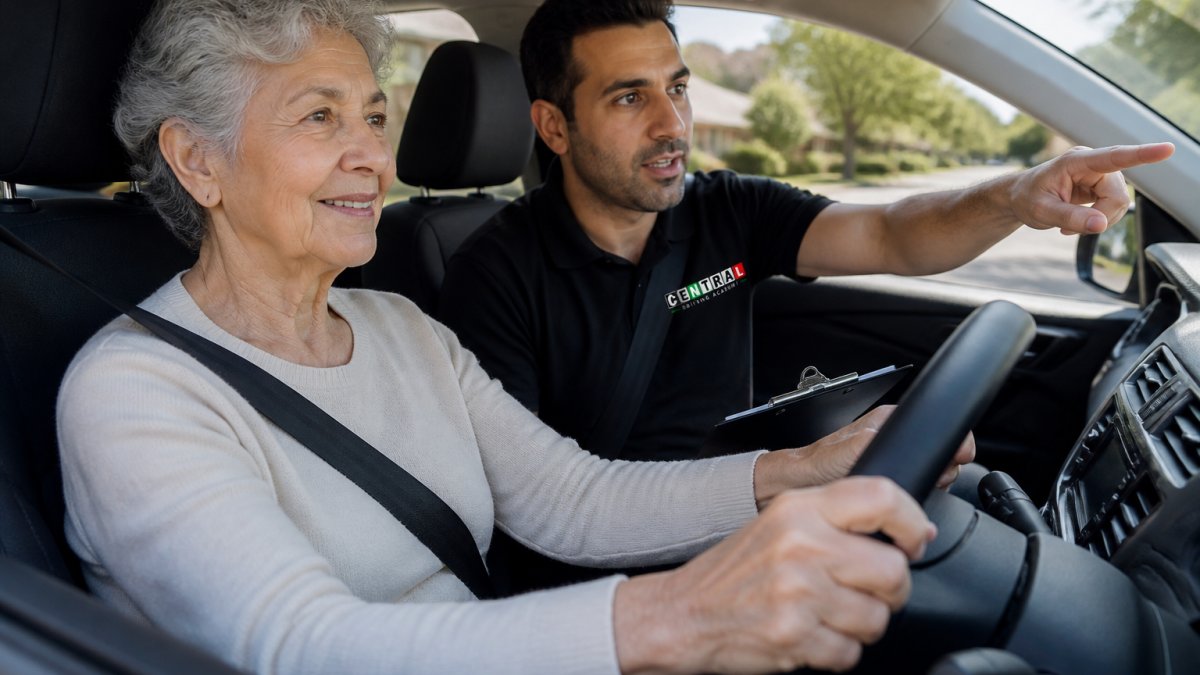
A patient instructor changes that. When someone sits beside you and calmly talks through a tricky merge, the fear shrinks. You are not being judged. You are being coached. The Canada Safety Council’s driver safety resources notes that refresher training helps older drivers retain skills and reduce risk, and the confidence effect is part of why.
The real difference between a nervous driver and a confident one often comes down to one thing: knowing what to do when something unexpected happens. That is exactly what defensive driving trains.
What to Look for in a Defensive Driving Instructor
The instructor matters more than the curriculum. A certified, patient teacher will get you further than any branded program with a rushed one.
Look for these qualities:
- Certification under the Motor Vehicle Act. Ask for it. Legitimate instructors can show credentials.
- Experience with older drivers. Teaching a 17-year-old and teaching a 72-year-old require different approaches.
- A calm, non-judgmental manner. You should never feel rushed or belittled.
- A clear assessment process. You want feedback you can act on, not vague praise.
- Practical logistics. Pick-up and drop-off, flexible scheduling, and a vehicle available for your road test all reduce friction.
At Central Driving Academy, our instructors are certified under the Motor Vehicle Act and teach in both English and Farsi, which matters for many families in the Tri-Cities area. We offer a free in-person assessment and provide a road test vehicle, so you are not scrambling to arrange one.
Frequently Asked Questions
Are defensive driving courses worth it for seniors?
Yes, for many seniors they are. These courses sharpen observation, scanning, and hazard anticipation, which matter more as reaction times change with age. They also address senior-specific concerns like night driving, merging, and roundabouts. In British Columbia, some insurers recognize completion for potential discounts, and the confidence gained can extend safe driving years. The value depends on your goals, but the practical skills and peace of mind make the investment worthwhile for most older drivers.
What do seniors learn in a defensive driving course?
Seniors learn defensive driving techniques for older drivers such as the three-second following rule, mirror and shoulder checking routines, and hazard scanning at intersections. Courses cover managing blind spots, safe lane changes, and handling roundabouts. Instructors also address age-related changes like slower reaction time and reduced night vision, teaching compensatory strategies. Many programs include a driving assessment for seniors to identify specific habits to improve, plus refresher modules on new road rules and vehicle technology.
Can seniors get an insurance discount for taking a defensive driving course in British Columbia?
Some insurers in British Columbia offer a senior driving course insurance discount, but it varies by provider. ICBC does not mandate a specific discount, so you should ask your insurer directly whether they recognize completion. Even without a discount, the safety benefits and potential reduction in claim risk can lower long-term costs. Always confirm eligibility and required documentation, such as a certificate of completion, before enrolling.
How long does a senior driving refresher course take?
Most senior driving refresher courses run between three and six hours, often split into classroom and in-car sessions. Some providers offer a single-day format, while others spread it over two half-days. The length depends on whether you choose a classroom-only course or one with behind-the-wheel training. For a driving assessment for seniors, expect a one- to two-hour evaluation drive. Ask the school for a breakdown before booking.
Staying safe on the road as you get older is not about giving anything up. It is about sharpening the skills you already have. If you want a clear picture of where you stand and a plan to improve, Central Driving Academy offers certified instructors, a free in-person assessment, bilingual English and Farsi instruction, flexible six-day scheduling, and a road test vehicle provided. Book Now with Central Driving Academy and drive with confidence again.