


Table of Contents
- Why Driving Instructors Are Impatient: The Real Reasons
- Signs of a Bad Driving Instructor vs. Firm Safety Feedback
- Driving Lesson Anxiety: Why Learners Feel Pressured
- How to Deal with a Rude Driving Instructor
- How to Talk to Your Driving Instructor About Concerns
- Building Confidence and Finding the Right Instructor Fit
- Frequently Asked Questions
Last Updated: October 18, 2026
Why Driving Instructors Are Impatient: The Real Reasons
Impatience from driving instructors impatient can feel personal, but it rarely is. What a learner reads as frustration is usually a mix of safety urgency, scheduling pressure, and habits built over hundreds of lessons. Understanding those causes does not excuse poor behavior, but it helps you separate a genuine safety correction from an instructor who is not the right fit.
Safety urgency is the most common cause
A driving instructor supervises a moving vehicle on public roads, where a delayed reaction, missed mirror check, or late brake can become a collision in seconds.
To read the moment, ask whether the sharp comment was tied to a specific, immediate risk. If the instructor raised their voice because you were drifting toward a cyclist, that is safety feedback under pressure.
Time pressure and scheduling realities
Many instructors run back-to-back lessons with little buffer, and a lesson running ten minutes over pushes the rest of the day.
This is context, not an excuse. A professional instructor manages the schedule so the learner does not absorb the stress. If impatience spikes only when a lesson runs long, that is a scheduling problem the school should fix, not something you need to internalize.
Repetition fatigue and the hundredth correction
Instructors repeat the same corrections constantly: mirror checks, speed before turns, hand position, blind spots. For the learner it may be the first or second time hearing it; for the instructor, the hundredth time that week.
What matters is whether the instructor still explains the why. A tired instructor who says “Mirror first, every time, because that cyclist was in your blind spot” is still teaching.
Learner anxiety and unpredictable inputs
Nervous learners make unpredictable decisions: sudden braking, freezing at an intersection, overcorrecting the wheel. From the instructor’s seat, unpredictability is the hardest thing to manage because it cannot be anticipated.
Anxiety also slows learning. A nervous learner may need the same route several times before it feels manageable. A good instructor expects this and builds repetition into the plan.
Communication style versus temperament
Some instructors are simply direct: short commands, a serious tone, no softened feedback. That can feel harsh to a learner who expected encouragement, but it is not automatically impatience. The test is consistency and respect: does the instructor explain corrections, answer questions, and treat you as a person, even when the tone is firm?
Workload and emotional labor
Instructors spend hours in a confined space with learners who may be anxious, overconfident, or inconsistent. That emotional labor accumulates, and schools that overload instructors with too many lessons per day, or give no breaks between learners, create the conditions for impatience. If your instructor seems short every time you see them, the problem may be the school’s scheduling rather than driving instructors impatient by nature.
Most instructor impatience traces to safety urgency, schedule pressure, repetition fatigue, or workload. Before you take it personally, check whether the sharpness was tied to an immediate hazard, whether it happens only at certain times, and whether the instructor still explains the why behind corrections.
Signs of a Bad Driving Instructor vs. Firm Safety Feedback
Not all impatience is the same. Some instructors are direct and firm about safety; others cross into disrespect or poor teaching. Learning the difference helps you decide whether to work through the tension or find a new instructor.
When Impatience Crosses the Line
A bad instructor:
- Yells or uses a loud, aggressive tone regularly
- Makes personal insults (“You’re not paying attention” vs. “You weren’t focused on that maneuver”)
- Refuses to explain why a correction matters
- Grabs the wheel or makes sudden moves without warning
Firm safety feedback sounds like:
- “That was too fast for that curve. Slow down to 40 before the turn”
- “You didn’t check your mirror. Every time you change lanes, mirror first”
- Clear, specific corrections tied to road safety
- A tone that’s serious but not hostile
The key difference is respect. A good instructor can be firm and direct without making you feel small or disrespected.
Constructive Feedback vs. Disrespectful Behavior
Constructive feedback addresses the behavior, not the person. “You’re not ready for the road test” is disrespectful. “Your three-point turns are inconsistent.
A professional instructor separates the mistake from your worth as a learner, focuses on the specific skill rather than your intelligence or ability overall, and offers solutions, not just criticism.
Disrespectful behavior includes:
- Raising their voice in anger (not emphasis)
- Making comments about your age, gender, or background
- Comparing you unfavorably to other learners
- Sighing heavily or rolling their eyes
If your instructor does these things consistently, it’s not about impatience. It’s about professionalism, and you deserve better.
Driving Lesson Anxiety: Why Learners Feel Pressured
Anxiety during driving lessons is common. You’re operating a heavy vehicle while someone watches your every move. The stakes feel high.
The truth is more nuanced: your anxiety isn’t a personal failing but a normal response to a high-pressure situation.
At Central Driving Academy, we understand that nervous learners need patience and clear communication. Building confidence takes time.
How to Deal with a Rude Driving Instructor
If an instructor’s impatience has crossed into rudeness, you have more options than most learners realize. The goal is to protect your safety and your learning, not to win an argument. A calm, documented, step-by-step approach works better than reacting in the moment.
Step 1: Respond in the moment without escalating
Stay calm and keep your voice level. Reacting emotionally usually makes the tension worse. Use short, neutral statements that set a boundary without confronting the instructor:
- “I understand this matters for safety. I am doing my best.”
- “I would like to keep going, but I need you to speak to me respectfully.”
- “Can you explain what I did wrong so I can improve?”
If the instructor continues to be rude after you have set a boundary, you have the right to end the lesson. Pull over safely, say you are ending the lesson early, and arrange to get home. Safety and respect matter more than finishing a scheduled session.
Step 2: Document what happened
As soon as possible after the lesson, write down the date, time, location, and what was said or done. Note whether the behavior was tied to a specific maneuver or hazard and whether it was a one-off or a pattern, and keep messages and booking records. Documentation turns a vague complaint into something a school or regulator can act on.
Step 3: Raise it with the instructor outside the car
Choose a time when you are not driving. Be specific and collaborative:
- “In yesterday’s lesson, when I missed the turn, I felt rushed when you corrected me. I would appreciate it if you could explain what I should do differently.”
- “I know you care about safety. I am nervous about driving, and sometimes your tone makes me more anxious. Can we find a way to work together that helps me feel more confident?”
Most professional instructors will respond well to this. If the instructor becomes defensive or dismissive, that is useful information: it tells you the behavior is unlikely to change.
Step 4: Escalate to the driving school
If the conversation does not resolve it, contact the school or the instructor’s employer in writing. State the dates, what happened, what you asked for, and what outcome you want (a different instructor, a refund for unused lessons, or a change in how lessons are conducted). Keep it factual and keep a copy.
Step 5: Know when to change instructors
Consider switching if any of these are true:
- The impatience is affecting your confidence or making you dread lessons.
- The instructor has been disrespectful despite your attempts to address it.
- You are not learning effectively because of the dynamic.
- You feel unsafe or anxious because of their reactions.
Changing instructors is not a failure. Different teaching styles work for different learners, and a new instructor may communicate in a way that fits you better.
Step 6: Understand your consumer and licensing options
In most provinces, driving schools and instructors operate under provincial licensing or consumer-protection rules. If a school will not address a legitimate complaint, ask the provincial consumer protection office about your options and check whether the instructor or school is licensed through the provincial licensing body. Keep your complaint factual and focused on what was promised versus what was delivered.
If you ever feel physically unsafe in the car, end the lesson immediately. Do not wait for the scheduled end time, and do not worry about being polite. Your safety comes first.
The sequence that works: stay calm in the moment, document what happened, raise it directly with the instructor, escalate in writing to the school, and switch instructors if the pattern continues. You do not need to tolerate disrespect to learn to drive.
How to Talk to Your Driving Instructor About Concerns
If your instructor’s impatience is becoming a problem, address it directly. Most instructors don’t realize how their tone comes across, and a calm conversation can often resolve it.
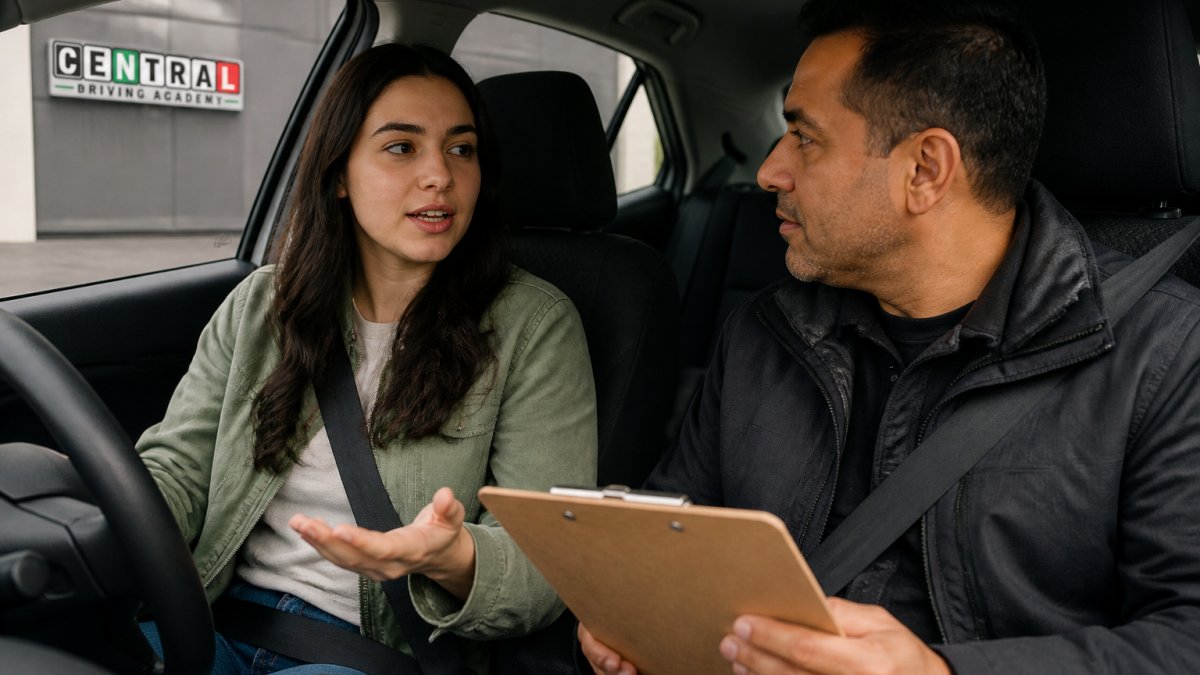
Choose a time outside the car. Don’t try to have this conversation during a lesson. Start with a specific example:
- “In yesterday’s lesson, when I missed the turn, I felt rushed when you corrected me. I’d appreciate if you could explain what I should do differently.”
- “I know you care about safety. I’m nervous about driving, and sometimes your tone makes me more anxious. Can we find a way to work together that helps me feel more confident?”
Be specific about what bothered you and what you need. Avoid accusatory language. Frame it as a collaboration: you and the instructor working together to improve your learning.
Most professional instructors will respond well to this conversation. They want you to succeed.
Building Confidence and Finding the Right Instructor Fit
Look for instructors who:
- Ask about your goals and concerns before starting
- Explain corrections clearly and connect them to road safety
- Celebrate progress, even small wins
- Adjust their teaching style based on your needs
- Communicate in a calm, respectful tone even when being firm
Central Driving Academy prioritizes this balance. Our certified instructors understand that impatience damages learning. We focus on building confidence alongside safety skills.
When you find an instructor who respects you while holding you to high standards, learning becomes easier. Your confidence grows.
Finding the right driving instructor matters. Impatience from an instructor can feel personal, but it’s usually rooted in the real pressures and safety concerns of the job.
Frequently Asked Questions
Why do driving instructors seem impatient?
Driving instructors manage multiple lessons daily, often with tight schedules and limited time between appointments. Safety concerns also heighten urgency, when a learner driver makes unpredictable decisions on the road, instructors react quickly to prevent accidents. Repetition of the same corrections across different learners, combined with the stress of responsibility for passenger safety, can create the appearance of impatience even when the instructor is genuinely concerned about road safety and lesson progress.
Is it normal for a driving instructor to get frustrated?
Yes, frustration is a natural response in high-pressure teaching environments. Driving instruction involves managing safety risks, time constraints, and learner anxiety simultaneously. However, there’s a difference between a firm, direct teaching style and genuine rudeness. Professional instructors channel frustration into clear, emphatic feedback designed to correct dangerous habits. If an instructor yells, uses disrespectful language, or makes you feel humiliated rather than corrected, that crosses into poor professionalism and warrants a conversation or instructor change.
How should I respond to an impatient driving instructor?
In the moment, stay calm and focused on the road. Take the feedback as safety-focused guidance rather than personal criticism. After the lesson, if the behavior bothered you, address it directly: ‘I noticed you seemed frustrated during [specific situation]. I want to improve, can you help me understand what I should have done differently?’ This opens dialogue without accusation. If the instructor’s tone consistently undermines your confidence or makes you anxious, request a meeting with the school to discuss a potential instructor change or ask for strategies to build your comfort.
Can I ask to change my driving instructor if they make me anxious?
Yes, absolutely. A good driving school, like Central Driving Academy, prioritizes learner comfort and instructor fit. If an instructor’s teaching style increases your anxiety rather than building confidence, speak with the school directly. Explain what specific behaviors or communication styles affect you negatively. Many schools can match you with an instructor whose personality and teaching approach better suit your learning needs. Your comfort and progress matter, finding the right fit improves outcomes and your road safety preparation.