Table of Contents
- Why Choose a Farsi Speaking Driving Instructor
- Private Driving Lessons With Pickup in Your Area
- ICBC Road Test Preparation: What to Expect
- How to Choose the Right Driving Instructor
- Cost of Driving Lessons in BC: What You Should Know
- Building Confidence as a Nervous Beginner Driver
- Certified Instructors Under the Motor Vehicle Act
- Conclusion
- Frequently Asked Questions
Last Updated: September 25, 2026
Why Choose a Farsi Speaking Driving Instructor
When your native language is Farsi, a farsi speaking driving instructor bridges the gap between your comfort at home and the demands of the road, ensuring you grasp critical safety concepts without translation delays or miscommunication.
Road terminology, traffic regulations, and emergency procedures require precise understanding. When an instructor explains hazard perception or right-of-way rules in your native language, concepts stick faster and you absorb corrections more deeply. Nervous beginners who understand their instructor’s feedback build confidence quicker than those who second-guess translations.
Central Driving Academy offers bilingual instruction in English and Farsi with certified instructors under the Motor Vehicle Act. Our personalized training respects your linguistic comfort while preparing you thoroughly for your ICBC road test.
Private Driving Lessons With Pickup in Your Area
Private lessons with convenient pickup transform driving instruction into an accessible service. Your instructor arrives at your home, workplace, or preferred meeting point, removing logistics barriers for teens without vehicles, busy professionals, and nervous learners.
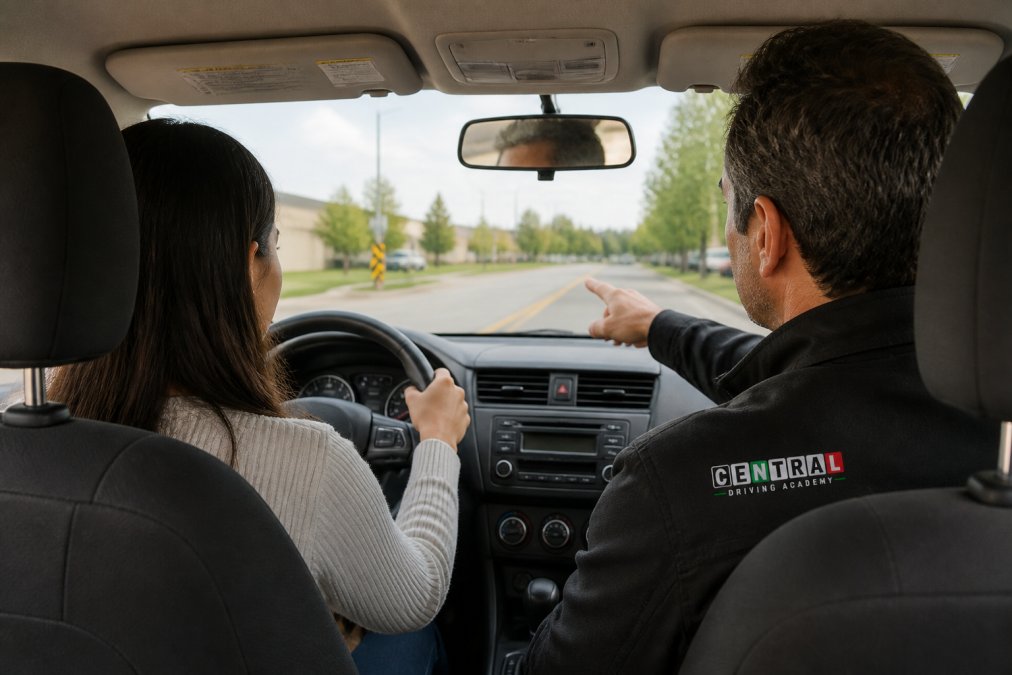
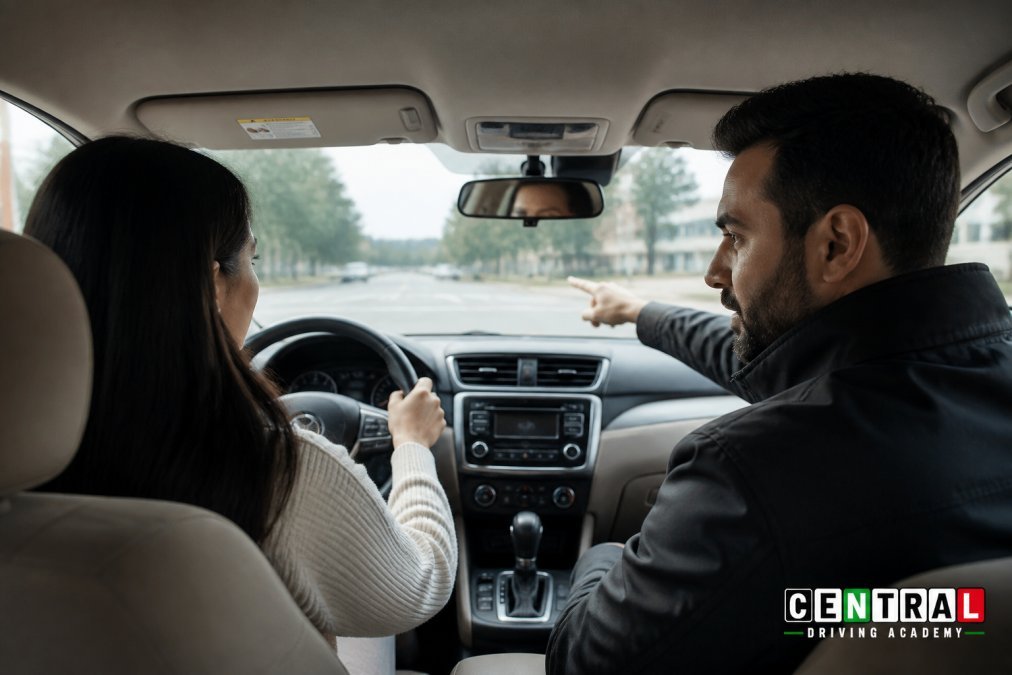
Training in your own neighbourhood builds real-world skills faster. You learn on roads you’ll actually drive, and route familiarization reduces anxiety during your ICBC road test. Your instructor points out specific hazards: school zones, construction areas, high-traffic intersections.
When your instructor handles logistics, lessons happen consistently on your schedule, and learners often book more frequently, accelerating skill development and test readiness.
ICBC Road Test Preparation: What to Expect
Class 7 and Class 5 Requirements
A Class 7 road test is your first major milestone after holding a learner’s license. It evaluates basic vehicle control, understanding of traffic signs, and safe decision-making in moderate traffic.
Class 5 is the full driver’s license after holding Class 7 for a minimum period. The Class 5 road test is more demanding, requiring smoother vehicle handling, faster decision-making, and comfort in heavier traffic.
Early lessons focus on foundational skills: smooth acceleration, proper braking, steering control. As you progress, training shifts toward specific maneuvers ICBC examiners test: parallel parking, three-point turns, lane changes, intersection navigation, and hazard recognition.
Common Test Routes and Road Conditions in Your Area
ICBC road tests in this region use routes mixing residential streets, arterial roads, and highways.
Test routes commonly include residential neighbourhoods with school zones, transitions onto busier arterial roads, and multi-lane intersections. Examiners deliberately choose routes that test your ability to manage varied traffic density. Routes feel more challenging during peak traffic hours, when tests are often scheduled.
Specific hazards you should practice include:
- School zone transitions: Recognizing when you’re entering or leaving a school zone, adjusting speed appropriately (30 km/h during school hours), and demonstrating awareness of crossing guards and children.
- Highway on-ramps and merging: Smooth acceleration, mirror checking, and safe lane positioning when entering higher-speed traffic.
- Multi-lane intersections: Positioning your vehicle correctly for your intended direction, managing turning traffic, and maintaining lane discipline.
- Pedestrian-heavy areas: Scanning for foot traffic, anticipating crossings, and demonstrating that you prioritize pedestrian safety over schedule.
Your instructor should drive your actual test route with you multiple times. You’ll learn which intersections have sight-line challenges, where pedestrian traffic peaks, and how to position your vehicle for optimal visibility.
Mock Tests and Route Familiarization
Mock road tests simulate ICBC conditions on your actual test route. Your instructor explains what examiners look for at each turn, intersection, and maneuver point, letting you experience evaluation pressure in a learning environment.
Route familiarization removes a major source of test anxiety. When you’ve driven a route multiple times, your cognitive load drops and you can focus on smooth execution.
A comprehensive mock test includes pre-test briefing on specific maneuvers, real-time feedback as you drive, and a post-test debrief with recommendations for follow-up lessons.
Central Driving Academy provides access to specific test routes in your area.
How to Choose the Right Driving Instructor
The right instructor matches your learning style, respects your pace, and builds confidence. Verify that all instructors are certified under the Motor Vehicle Act, ask for proof. Legitimate schools display this openly.
Assess communication style. A good instructor explains why you’re practicing a skill and corrects mistakes constructively. A patient instructor who validates your concerns while pushing you toward growth creates conditions where confidence develops.
Confirm they offer the specific services you need: pickup in your area, a vehicle for your ICBC test, mock tests on your actual test route, and bilingual instruction if needed.
Check for real customer feedback with specific details.
Cost of Driving Lessons in BC: What You Should Know
Driving lesson pricing varies based on instructor certification, lesson length, pickup service, vehicle provision, and mock tests. Understanding the cost structure helps you evaluate true value.
Typical Pricing Models
Hourly rates for certified driving instruction vary. Instructors who pick you up and provide their own vehicle may charge at the higher end because they absorb fuel, maintenance, and insurance costs.
Package deals often provide better value than pay-per-lesson pricing.
Test-day services are sometimes bundled and sometimes charged separately. If your instructor provides the vehicle for your ICBC road test, an additional fee may apply beyond lesson costs, as the instructor is dedicating time and assuming liability. Some schools include this in package deals; others charge it separately.
Hidden Costs to Consider
When comparing instructors or schools, look beyond hourly rate:
- Transportation: If pickup isn’t included, you’re paying for your own transportation to a fixed location, plus time spent traveling. This adds up quickly for learners without their own vehicle.
- Vehicle provision: If you must provide your own vehicle for lessons, you’re absorbing fuel and wear-and-tear costs. If the instructor provides a vehicle, this is typically reflected in the hourly rate.
- Test-day vehicle: Some instructors require you to arrange your own vehicle for the ICBC test, which creates stress and logistics headaches. Others provide their vehicle as part of a package.
- Mock tests: Schools that include mock tests on your actual test route charge more per hour but save you money overall because you’re less likely to fail and retake the test.
- Bilingual instruction: If you require Farsi-speaking instruction, availability is more limited, and rates may be slightly higher due to specialized expertise.
Value Per Lesson vs. Lowest Price
A cheaper instructor who requires you to arrange your own transportation and vehicle for testing creates hidden costs and stress. An instructor who picks you up, provides test-day vehicle access, includes mock tests on your actual route, and offers bilingual instruction may cost $5-$10 more per hour but delivers better outcomes. First-attempt pass rates matter. Retaking a failed test costs time, money, and emotional toll.
Consider this calculation: If a cheaper instructor saves you $10/hour but results in a failed test (requiring a $200 retest fee, plus 5-10 additional lessons at $60/hour = $300-$600), you’ve actually spent $500-$800 more.
Questions to Ask About Pricing
- Is pickup included in the quoted hourly rate, or is it an add-on?
- Does the package include mock tests on your actual ICBC test route?
- Will the instructor provide a vehicle for your ICBC road test, or must you arrange one?
- Are there any discounts for booking multiple lessons upfront?
- Does the school offer a free assessment or consultation to identify your skill gaps before you commit to a package?
- If you’re taking bilingual instruction, is there a premium, and if so, what justifies it?
Transparency on these points separates schools that are confident in their value from those that obscure their true costs.
Building Confidence as a Nervous Beginner Driver
Nervousness is normal, it’s actually a sign you take driving seriously. The challenge is channeling that caution into careful attention rather than letting it paralyze your decision-making. Your instructor plays a critical role here. They should normalize your anxiety, explain what’s happening in your body (heightened alertness, not danger), and gradually expose you to more challenging scenarios so you build evidence that you can handle them.
Certified Instructors Under the Motor Vehicle Act
In Canada, driving instruction is regulated. Instructors must meet specific training and certification standards set out in provincial motor vehicle legislation. A certified instructor has completed accredited training, passed examinations, and maintains current credentials. This isn’t a casual credential, it’s a legal requirement.
Conclusion
Finding a farsi speaking driving instructor in your area means removing a barrier that holds many learners back. Language clarity, cultural understanding, and personalized instruction aren’t luxuries, they’re foundations for safe, confident driving. Central Driving Academy combines bilingual expertise with certified instruction, flexible pickup service, and comprehensive ICBC road test preparation. Our instructors understand the specific challenges nervous beginners face, and they’re trained to build genuine confidence through patient, structured lessons.
Frequently Asked Questions
What qualifications should a Farsi speaking driving instructor have?
Your instructor should be certified under the Motor Vehicle Act and approved by ICBC. They must hold a valid driver’s license, have professional training in vehicle instruction, and pass background checks. Bilingual fluency in Farsi and English is essential, along with experience teaching learners who speak Farsi at home. Ask for proof of certification and inquire about their experience with students preparing for ICBC road tests.
How much do driving lessons cost in BC, and what affects the price?
Pricing for driving lessons in BC depends on several factors including lesson length, instructor experience, location, and whether the package includes vehicle provision for your ICBC road test. Package deals often offer better value than single lessons. For accurate pricing tailored to your needs, contact your instructor directly for a quote. Many schools offer free in-person assessments to discuss your goals and provide transparent pricing.
Can the driving school provide a vehicle for my ICBC road test?
Many certified driving schools provide vehicles that meet ICBC requirements for road tests. This eliminates the stress of arranging your own vehicle and ensures the car meets all safety and equipment standards. When selecting a school, confirm that vehicle provision is included in your package or available as an add-on service. This is a significant advantage for learners without access to a suitable test vehicle.
How do I prepare for my ICBC road test if I’m nervous about driving?
Start with mock road tests that simulate the actual ICBC test conditions and routes in your area. Practice hazard perception, intersection safety, parallel parking, and right-of-way rules with your instructor. Discuss your anxiety openly with your instructor so they can adjust their teaching style to build your confidence gradually. Consistent practice over several weeks, combined with patient instruction in your native language, significantly reduces test anxiety and improves performance.