Table of Contents
- Why Choose a Driving School With Farsi Instructors
- What to Look for in a Certified Driving Instructor
- Private Driving Lessons With Pickup: What to Expect
- Understanding the Cost of Driving Lessons in BC
- How to Prepare for the ICBC Road Test
- Overcoming Language Barriers in Driver Training
- How to Book Your First Lesson
- Frequently Asked Questions
Last Updated: October 2, 2026
Why Choose a Driving School With Farsi Instructors
Learning to drive in your native language removes a critical barrier that many learners face. When you’re processing both driving fundamentals and English terminology simultaneously, your cognitive load doubles. A driving school with Farsi instructors lets you focus entirely on the road, the vehicle, and mastering defensive techniques without translation delays.
This matters most during high-stress moments. In an emergency situation, you need to understand your instructor’s guidance instantly. There’s no time to mentally translate “check your blind spot” or “brake gently.” Communication happens in the language you think in, which means faster reactions and safer decisions.
Farsi-speaking learners also benefit from cultural familiarity in the car. An instructor who understands your background can explain Canadian traffic rules in context, compare them to driving customs you may know, and address specific anxieties common among newcomers. At Central Driving Academy, our bilingual instructors combine professional certification with lived experience supporting immigrant and international learners across Coquitlam, Port Coquitlam, and Port Moody.
Beyond communication, native-language instruction builds confidence faster. Nervous drivers already carry self-doubt into the car. Adding language stress on top of that creates a cycle of anxiety that slows progress. When your instructor speaks Farsi, you can ask clarifying questions without embarrassment, admit when you’re unsure, and learn at your own pace.
What to Look for in a Certified Driving Instructor
Not all driving instructors meet the same standard. Before booking, verify that your instructor holds proper credentials under the Motor Vehicle Act. This certification confirms they’ve completed training, passed assessments, and maintain liability insurance. It’s your baseline for legitimacy.
Beyond certification, look for instructors with specific experience teaching Farsi speakers. Ask directly: Do they teach regularly in Farsi, or do they speak it casually? There’s a difference. An instructor fluent in conversational Farsi may struggle with technical driving terminology in that language. You want someone who has taught the vocabulary of lane changes, mirror checks, and road signs in Farsi.
Check for patience and a teaching approach that matches your personality. Some learners thrive with firm, direct feedback. Others need encouragement and gentler correction. Read reviews specifically from nervous or anxious learners, their feedback tells you whether the instructor builds confidence or adds pressure. Jordan Wong’s review of Central Driving Academy captures this: “The instructor is very professional, knowledgeable and was a great teacher.”
Ask about their assessment process. A good instructor will do a free in-person assessment before your first paid lesson. This gives them a baseline of your skills and lets you gauge whether you’re comfortable with their teaching style. It’s also your chance to confirm their Farsi ability and communication clarity.
Finally, confirm they provide the road test vehicle. You don’t want to scramble for a compliant car weeks before your ICBC exam. Central Driving Academy includes the road test vehicle as part of the service, eliminating this logistical headache.
Private Driving Lessons With Pickup: What to Expect
Private lessons with pickup mean your instructor arrives at your home or a location you choose, then drives you to practice areas. This saves commute time and reduces pre-lesson stress. You’re not rushing to meet someone across town, the lesson starts when they arrive at your door.
The first lesson typically runs 60-90 minutes. Your instructor will assess your current skill level, discuss your goals (preparing for the ICBC road test, building confidence, refreshing skills after years away), and establish a practice plan. They’ll explain what they’ll focus on and what you should practice between lessons.
Expect structured progression. Early lessons cover vehicle familiarity: mirrors, controls, seat adjustment, and basic handling in quiet areas. As you improve, you’ll move to busier streets, intersections, highway driving, and defensive techniques. Your instructor will introduce one new challenge at a time rather than overwhelming you with everything at once.
During lessons, your instructor will give real-time feedback. They might say “ease off the accelerator earlier” or “check your mirror before changing lanes.” This immediate correction is far more effective than general advice. You’re building muscle memory and decision-making patterns while they’re fresh.
Between lessons, you’ll practice on your own (if you have access to a vehicle and a supervising driver). Your instructor will assign specific exercises: “Practice parallel parking in empty parking lots” or “Drive the same route twice to build familiarity.” This independent practice accelerates your progress.
Pickup-based lessons work best when you’re consistent. Weekly lessons with daily practice between sessions produce faster improvement than sporadic lessons. But flexibility matters too, if you’re a busy student or professional, Central Driving Academy’s six-day availability means you can fit lessons around your schedule.
Understanding the Cost of Driving Lessons in BC
Pricing for driving lessons varies based on lesson length, instructor experience, location, and whether you need specialized services like road test vehicle provision. Rather than quoting specific figures that may change, contact Central Driving Academy directly for current rates and package options. Pricing depends on your specific needs: how many lessons you require, whether you need intensive preparation for a failed test, and if you want the road test vehicle included.
When comparing costs across providers, look beyond the hourly rate. Some schools charge less per hour but don’t provide the road test vehicle, which forces you to find your own compliant car. Others bundle assessment, lessons, and test preparation into packages that offer better overall value. Central Driving Academy’s budget-friendly pricing includes these core services, making the total investment clearer upfront.
Ask about package discounts. Many schools offer reduced rates if you book multiple lessons in advance. Payment flexibility matters too, can you pay per lesson, or must you commit to a full package? Understand cancellation policies before committing, especially if your schedule is unpredictable.
Consider the instructor’s qualifications when evaluating cost. A certified instructor with experience teaching Farsi speakers may charge more than a newer instructor, but you’re paying for expertise and faster progress.
How to Prepare for the ICBC Road Test
The ICBC road test assesses your ability to drive safely in real-world conditions. It’s not a trick exam, examiners want you to pass. They’re testing whether you can handle the vehicle, follow traffic laws, and respond safely to other road users.
Theory and Practical Training Requirements
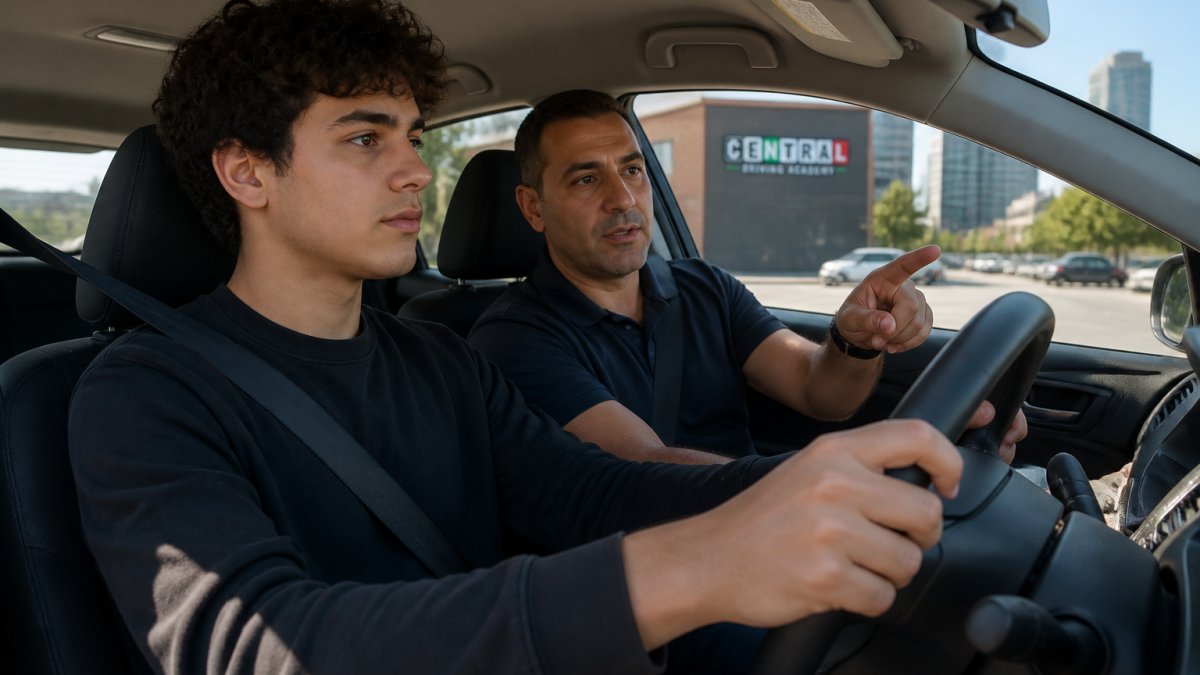
Before the road test, you need both theoretical knowledge and practical skill. Theory covers traffic laws, road signs, right-of-way rules, and safe driving practices. You’ll study the ICBC Driver’s Guide and take the knowledge test, which you must pass before scheduling a road test.
Mock Road Test Checklist
Before your actual ICBC test, do a mock road test with your instructor. This simulates the real exam as closely as possible. Your instructor will follow the same route (or similar conditions), give the same types of instructions, and score you using ICBC criteria.
Use this checklist to track readiness:
- Vehicle walk-around: Check mirrors, lights, wipers, and tire condition without prompting
- Seat and mirror adjustment: Position yourself correctly for comfort and visibility
- Starting the vehicle: Smooth ignition, proper gear selection, controlled release of parking brake
- Smooth acceleration and braking: No jerky movements, appropriate speed for conditions
- Lane changes: Mirror checks, shoulder checks, smooth steering, proper signaling
- Turning: Appropriate speed, smooth steering, proper lane positioning
- Parking: Parallel parking, perpendicular parking, smooth execution
- Intersection navigation: Proper stopping, right-of-way understanding, smooth turns
- Highway driving: Merging, lane changes, speed management
- Defensive driving: Anticipating hazards, maintaining safe following distance, reacting calmly to other drivers
- Traffic sign recognition: Identifying and responding to signs correctly
- Pedestrian awareness: Stopping for pedestrians, checking for them at intersections
Overcoming Language Barriers in Driver Training
Language barriers in driver training aren’t just about vocabulary. They’re about confidence, clarity, and the ability to ask questions without shame. When your instructor speaks Farsi, these barriers dissolve.
How to Book Your First Lesson
Booking your first lesson should be straightforward. Contact Central Driving Academy directly through their website or phone. Describe your situation: Are you a complete beginner, or refreshing skills after years away? Have you already passed your knowledge test, or are you just starting? Do you need the road test vehicle for your exam?
Confirm a few logistics before your first paid lesson:
- Pickup location: Where will your instructor meet you? Home, a specific parking lot, or another spot?
- Vehicle: Will you use your own car, or does Central Driving Academy provide one for lessons?
- Schedule: What days and times work best for you? Central Driving Academy’s six-day availability means you have flexibility.
- Payment method: How will you pay, per lesson or package? What’s the cancellation policy?
Frequently Asked Questions
Are there benefits to learning to drive in my native language?
Yes. Native-language instruction eliminates confusion about driving terminology and safety rules, allowing you to focus entirely on vehicle control and road awareness. For Farsi speakers, understanding instructions without translation delays builds confidence faster and reduces anxiety. You can ask clarifying questions without hesitation, which is especially important when learning defensive driving techniques and traffic regulations. This direct communication also strengthens the instructor-student relationship, leading to more effective feedback and faster skill development.
How many driving lessons are typically required to pass the ICBC road test?
Nervous or anxious beginners may benefit from additional lessons to build confidence. The ICBC road test assesses vehicle handling, traffic awareness, and adherence to traffic rules and regulations. A certified driving school with Farsi instructors can assess your readiness through a free in-person evaluation and recommend a personalized lesson plan tailored to your needs.
What should I look for in a certified driving instructor?
Verify that the instructor holds current certification under the Motor Vehicle Act and has completed formal driver training program requirements. Check for credentials and registration with ICBC-approved programs. Look for instructors who offer flexible scheduling, provide a free assessment, and can supply a vehicle for your road test. For Farsi speakers, confirm bilingual instruction in both English and Farsi. Read reviews from past students about their patience, communication style, and success rates with nervous or anxious learners.
Do Farsi-speaking driving schools provide vehicles for the road test?
Many certified driving schools, including those offering Farsi-language instruction, provide road test vehicles as part of their service. This eliminates the stress of arranging your own vehicle and ensures it meets ICBC requirements. Before booking, confirm that your chosen school includes vehicle provision in their service package. This is an important feature because ICBC has specific vehicle standards, and using an unfamiliar car on test day can increase anxiety. Ask during your free in-person assessment whether this service is included.