Table of Contents
- Why Drivers Look Beyond Standard Driving Schools in Port Coquitlam
- 1. Private Driving Lessons Port Coquitlam: One-on-One Instruction
- 2. Driving Practice with a Supervisor BC: The Family Route
- 3. ICBC Road Test Preparation Port Coquitlam: Self-Directed Study
- 4. Road Test Car Rental Port Coquitlam: Borrowing or Renting a Test Vehicle
- 5. Blended Learning: Combining Online Theory with On-Road Coaching
- Comparing the Alternatives: Which One Fits Your Situation?
- Frequently Asked Questions
Last Updated: October 17, 2026
Why Drivers Look Beyond Standard Driving Schools in Port Coquitlam
Not every learner needs a full classroom program, and plenty of people in the Tri-Cities are quietly discovering the 5 alternatives to standard driving schools in Port Coquitlam. The 5 alternatives to standard driving schools in Port Coquitlam covered below range from one-on-one private lessons to supervised family practice, self-directed ICBC test prep, borrowed test vehicles, and blended online-plus-on-road learning. At Central Driving Academy, we meet learners every week who started down one of these paths and only later realized they needed more structure. Here’s the honest breakdown of each option, who it suits, and where it falls short.
The first thing to understand is that British Columbia doesn’t force you into a packaged driving school. Under the Graduated Licensing Program, new drivers move through the Learner (L) and Novice (N) stages, and the ICBC Graduated Licensing Program overview sets out the rules for each stage. How you prepare for those stages is largely up to you.
That flexibility is a gift and a trap. The learners who do well tend to pick an option that matches their actual gap: no wheel time, no confidence, no test-day logistics, or no understanding of the theory. Choosing by price alone is where most people go wrong.
1. Private Driving Lessons Port Coquitlam: One-on-One Instruction
Private driving lessons in Port Coquitlam mean paying for individual sessions with a certified instructor rather than joining a group cohort. You get the whole car, the whole hour, and feedback aimed at your specific weaknesses. For nervous beginners, that single change can be the difference between dread and progress.
What Private Lessons Cover That Group Programs Don’t
A group program moves at the pace of its slowest learner. Private instruction doesn’t. A good instructor spends the first session assessing what you can already do, then builds a plan around the gaps.
- Highway merging and lane changes on the Mary Hill Bypass and Highway 1
- Parallel parking and reverse stall maneuvers, practiced until they’re boring
- Left turns across traffic at uncontrolled intersections
- Defensive scanning habits, not just test-day choreography
- Anxiety management for drivers who freeze at the wheel
The trade-off is cost per hour. Private lessons usually cost more per session than a group package, and you’re paying for instructor time either way. The other catch: quality varies enormously between providers, so ask whether instructors are certified under the Motor Vehicle Act before you book.
Ask any provider for a free in-person assessment before you commit to a package. A short evaluation can help you understand your needs.
2. Driving Practice with a Supervisor BC: The Family Route
Driving practice with a supervisor BC rules allow is the cheapest path available, and it’s the one most families default to. A parent, relative, or friend rides along while you log hours in a familiar car. No lesson fees, no scheduling around an instructor.
Who Qualifies as a Supervisor Under BC Rules
A supervisor in British Columbia must hold a valid Class 1, 2, 3, 4, or 5 driver’s licence and have at least three years of driving experience. They must sit in the front passenger seat and stay sober and attentive. The ICBC licensing information for new drivers confirms the supervision requirements for learner-stage drivers.
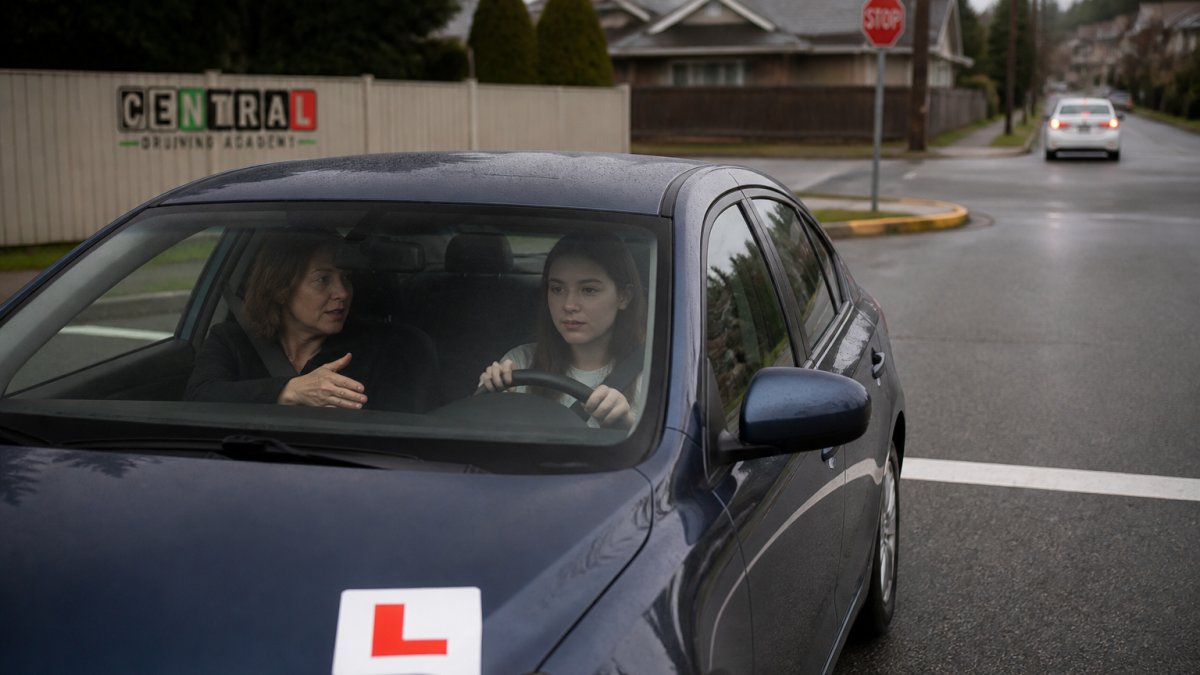
The honest limitation is that supervisors teach what they know. If your parent has driven for thirty years, they may not remember what examiners look for, and family tension can turn a practice session into an argument. The fix is to use family practice for hours and volume, then bring in professional instruction for the specific skills that get marked.
Supervised practice without any professional input often builds bad habits that take longer to unlearn than to learn correctly. If your supervisor’s feedback contradicts what an examiner expects, the examiner wins.
3. ICBC Road Test Preparation Port Coquitlam: Self-Directed Study
ICBC road test preparation in Port Coquitlam can be done entirely on your own, and some learners genuinely thrive that way. ICBC publishes its driving guides and test expectations, so the information is available for anyone willing to read it carefully.
Self-directed prep works like this:
- Read the official ICBC driving guide cover to cover, twice
- Study the class 7 knowledge test material until practice quizzes feel easy
- Drive the likely test routes around Port Coquitlam and Coquitlam
- Practice the specific maneuvers examiners score: parking, lane changes, intersection turns
- Book your road test and review the vehicle requirements in advance
What self-study can’t do is see your blind spots. You can’t correct a habit you don’t know you have, and nervous drivers tend to overestimate their readiness. Self-directed prep suits learners with prior driving experience or a supervisor who knows the standards well.
4. Road Test Car Rental Port Coquitlam: Borrowing or Renting a Test Vehicle
Road test car rental in Port Coquitlam solves a specific, practical problem: your test vehicle has to meet ICBC’s requirements. It must be in safe working order, properly insured, and free of dashboard warning lights. Borrowing a relative’s car works if it passes, but a rental or school-provided vehicle removes the guesswork.
Here’s the comparison of your vehicle options:
| Option | Best For | Main Risk | What to Check |
|---|---|---|---|
| Borrow a family car | Learners with a reliable, insured vehicle | Fails inspection on test day | Insurance, lights, tires, warning lights |
| Rent a test vehicle | Learners with no suitable car | Booking availability | Rental terms and insurance coverage |
| Use a school’s vehicle | Learners already enrolled somewhere | Usually tied to lessons | Confirm the vehicle is included in your package |
Some driving schools provide a road test vehicle as part of their service, which is worth asking about directly. At Central Driving Academy, we provide a road test vehicle as part of our offering.
5. Blended Learning: Combining Online Theory with On-Road Coaching
Blended learning pairs online theory study with real on-road coaching, and it’s the option most learners land on after trying the extremes. You handle the knowledge test material at your own pace, then spend paid time on the car where it actually counts.
This approach suits busy students and professionals who can’t commit to fixed classroom hours. Online modules cover signs, rules, and hazard awareness; in-car sessions focus on execution. The split can be a flexible option.
The catch is discipline. Blended learning assumes you’ll actually finish the online portion, and many learners don’t. If you know you need deadlines and accountability, a structured program with scheduled sessions will serve you better.
The best alternative is the one that closes your specific gap. No wheel time means supervised or private practice. No test-day logistics means sort out the vehicle. No confidence means professional instruction, not more family laps.
Comparing the Alternatives: Which One Fits Your Situation?
Choosing between these options comes down to three questions: how much driving experience you already have, whether you have a suitable supervisor and vehicle, and how much structure you need to stay on track. Cost matters, but it’s a poor primary filter because the cheapest route can cost more in retests and extra lessons.
| Alternative | Best For | Watch Out For |
|---|---|---|
| Private lessons | Nervous beginners, targeted skill gaps | Higher hourly cost, variable instructor quality |
| Supervised family practice | Learners with a willing, experienced supervisor | Bad habits and family friction |
| Self-directed ICBC prep | Experienced learners with prior wheel time | Unseen weaknesses, overconfidence |
| Test vehicle rental | Learners without a suitable car | Availability and insurance terms |
| Blended learning | Busy students and professionals | Requires self-discipline |
If you’re unsure which fits, start with an assessment. A short in-person evaluation tells you more about your readiness than any comparison table can, and it’s the approach we take at Central Driving Academy before recommending a plan. Our instructors are certified under the Motor Vehicle Act, we offer bilingual instruction in English and Farsi, and we provide pick-up and drop-off across the Tri-Cities, which matters if you don’t yet have a car of your own.
Frequently Asked Questions
Can you learn to drive in Port Coquitlam without enrolling in a driving school?
Yes. In British Columbia, learners can practice with a qualified supervisor and prepare for the ICBC road test without a formal school. The catch is that a supervisor must be 25 or older with a valid Class 5 licence and no prohibitions in the past two years, and they need to be genuinely comfortable teaching. Many learners combine supervisor practice with a few private driving lessons Port Coquitlam providers offer, so bad habits get corrected before test day rather than repeated for months.
Can I use a driving school’s car for my ICBC road test?
Many driving schools provide a road test car rental Port Coquitlam learners can book for test day, usually bundled with a warm-up lesson beforehand. The vehicle must meet ICBC requirements, including valid insurance and a clean, roadworthy condition. Confirm the school’s vehicle is available on your test date and ask whether the warm-up session is included. Arranging this in advance removes one of the most common last-minute stressors for first-time test takers.
What should I look for in a driving instructor in Port Coquitlam?
Check that the instructor is certified under the Motor Vehicle Act, ask whether they are registered with ICBC, and confirm their vehicle is insured for instruction. Beyond credentials, ask about their experience with nervous learners and whether they offer pickup and drop-off. A free in-person assessment is a good sign, since it lets you meet the instructor before committing. Reviews on Google give a sense of how patient and professional past students found them.
How can nervous drivers build confidence behind the wheel?
Start in low-traffic areas and quiet residential streets, then add complexity gradually: busier roads, left turns at intersections, then highway merges. Short, frequent practice sessions work better than long ones, and a patient instructor or supervisor who stays calm when you make a mistake matters more than hours logged. Practicing the specific ICBC road test routes in Port Coquitlam also helps, because familiar roads feel less intimidating than unknown ones.
Picking the right path is only half the battle; the other half is finding instruction that actually prepares you for test day without adding stress. Central Driving Academy offers a free in-person assessment, a road test vehicle, flexible six-day scheduling, and certified instructors who work with nervous beginners every day. Book now with Central Driving Academy and walk into your ICBC road test knowing exactly what to expect.