Table of Contents
- Can You Rent a Car for Your ICBC Road Test?
- ICBC Road Test Vehicle Requirements
- Rental vs. Personal Vehicle: Which Should You Choose?
- ICBC Road Test Warm-Up Lesson: Preparing With Your Test Vehicle
- How to Book a Rental Vehicle for Your Road Test
- What to Bring to Your ICBC Road Test
- Insurance and Liability: What You Need to Know
- Common Mistakes to Avoid When Renting for Your Road Test
- Next Steps: Preparing for Success
- Frequently Asked Questions
Last Updated: October 4, 2026
Can You Rent a Car for Your ICBC Road Test?
Yes, you can rent a car for your ICBC road test. Many learner drivers choose to rent a test-ready vehicle instead of using their own car.
At Central Driving Academy, we help students navigate this process. We provide vehicles specifically prepared for road tests, which removes uncertainty about whether your rental will pass inspection.
Renting offers real advantages. You avoid stress about your personal vehicle’s condition. You get a car that instructors know inside and out. Most importantly, you can practice in the exact vehicle you’ll use for your test.
But there are important steps to follow. You need to confirm eligibility with ICBC first. You must book your rental early. And you should inspect the vehicle thoroughly before test day.
This guide walks you through everything you need to know about how to rent car ICBC road test successfully.
ICBC Road Test Vehicle Requirements
Your rental must meet specific safety and mechanical standards set by ICBC. These requirements exist to ensure fair testing conditions and vehicle safety during your examination.
Safety and Mechanical Standards
The vehicle must be in good working condition with no safety defects. ICBC inspectors check brakes, steering, lights, wipers, tires, and mirrors before your test begins.
Your rental car needs:
- Valid registration and insurance
- All lights working (headlights, brake lights, turn signals, interior lights)
- Functional wipers and washer fluid
- Properly inflated tires with adequate tread
- Working seatbelts in front and back
- Functional horn
- Clean windshield with no cracks in the driver’s line of sight
- Mirrors that adjust properly
- Working parking brake
The vehicle must have manual or automatic transmission. ICBC accepts both. If you learned on an automatic, your test vehicle should be automatic. If you practiced on a manual, use a manual for your test.
Documentation You’ll Need
Before renting, gather the right paperwork. The rental company will need your driver’s license and proof of insurance. ICBC will need to see the vehicle’s registration at your test appointment.
Bring these documents on test day:
- Your learner’s license
- Your ICBC appointment confirmation
- The rental agreement showing you’re authorized to use the vehicle
- Proof of insurance (the rental company’s policy covers the vehicle)
- Your driver’s license
Many rental agencies provide a package specifically for road test students. They handle the paperwork and ensure everything meets ICBC standards. This removes guesswork from the process.
Rental vs. Personal Vehicle: Which Should You Choose?
This decision depends on your situation. Both options work, but they have different trade-offs.
Renting a test-ready vehicle offers consistency. You practice in the same car you’ll use for your test. There’s no surprise about how the brakes feel or where the mirrors are positioned.
Using your own vehicle saves money. If your car meets ICBC standards, you avoid rental fees. You’re already comfortable with how it handles. You know its quirks and strengths.
But personal vehicles create risk. Your car might fail the pre-test inspection. A minor mechanical issue could delay your test or force you to reschedule.
Consider your timeline. If your test is more than four weeks away, using your own vehicle makes sense. You have time to fix any issues.
Consider your confidence level. Nervous drivers benefit from renting because they can focus on driving, not worrying about vehicle condition.
ICBC Road Test Warm-Up Lesson: Preparing With Your Test Vehicle
A warm-up lesson with your actual test vehicle for your rent car ICBC road test is one of the best investments you can make. This isn’t just practice. It’s specific preparation.
During a warm-up lesson, you become familiar with the rental’s unique characteristics. You learn how responsive the steering is. You feel how the brakes engage. You practice parallel parking and three-point turns in the exact vehicle you’ll use during your test.
Central Driving Academy offers warm-up lessons specifically designed for this purpose. Our certified instructors work with you in your test vehicle. You’ll practice hazard perception, lane changes, and maneuverability in realistic conditions.
A good warm-up lesson covers:
- Vehicle orientation (mirrors, controls, seat adjustment)
- Local test routes and common hazard areas
- Parallel parking and reverse maneuvers
- Intersection navigation and traffic law application
- Emergency stops and quick decision-making
Book your warm-up lesson within one week of your test. This timing keeps the skills fresh without being too far in advance. It gives you confidence without letting anxiety build back up.
How to Book a Rental Vehicle for Your Road Test
The booking process has three critical steps. Follow them in order to avoid complications.
Step 1: Confirm Vehicle Eligibility With ICBC
Contact ICBC or check their website to confirm what your test vehicle must have (Prepare for your road test appointment). Standards are consistent across the province, but it’s worth verifying. Ask specifically about:
- Transmission type (manual or automatic)
- Minimum tire tread depth
- Required safety equipment
- Whether the vehicle needs to be Canadian-registered
Some rental companies offer ICBC-certified vehicles specifically. These have already been inspected and approved. This removes uncertainty.
Step 2: Reserve Your Rental in Advance
Book your rental at least two weeks before your test date. This gives you time to arrange a warm-up lesson and practice in the vehicle.
When booking, tell the rental company you need the car for an ICBC road test. Many agencies have specific packages for this. They’ll ensure the vehicle meets requirements and provide all necessary documentation.
Confirm in writing that the vehicle you’re reserving meets ICBC standards. Ask for a list of the vehicle’s features and condition. Request that the same vehicle be held for your test date if possible, so you’re not surprised with a different model on the day.
Step 3: Inspect the Vehicle Before Test Day
Pick up your rental at least one day before your test. Never pick it up on test day. You need time to get comfortable with how it drives.
Perform a thorough inspection:
- Check all lights (headlights, brake lights, turn signals, interior dome light)
- Test the windshield wipers and washer fluid
- Verify tire condition and pressure
- Confirm mirrors adjust properly
- Test the horn
- Check seatbelt function
- Look for any cracks or damage to the windshield
- Verify the parking brake works
- Confirm the registration and insurance documents are in the vehicle
If anything fails inspection, contact the rental company immediately. They’ll provide a replacement vehicle. Don’t wait until test day to discover problems.
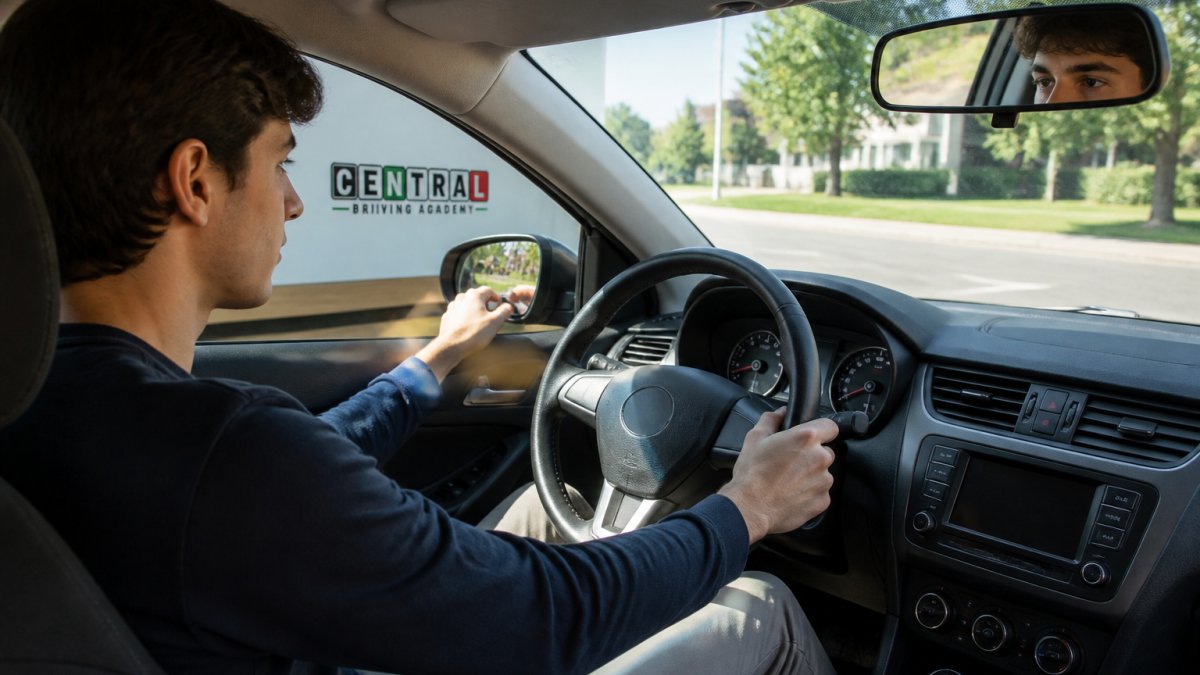
Drive the vehicle around your neighborhood for 15 minutes. Get a feel for the brakes, steering response, and visibility. Note anything unusual so you can mention it to your instructor during your warm-up lesson.
What to Bring to Your ICBC Road Test
Arrive at your test location 15 minutes early. Bring these documents:
- Your learner’s license
- Your ICBC appointment confirmation
- The rental agreement
- Proof of insurance
- A valid photo ID (passport or provincial ID card)
Wear comfortable clothing and closed-toe shoes. Your shoes need to work the pedals without slipping. Avoid loose clothing that might catch on controls.
Bring your glasses or contact lenses if you need them for driving. ICBC requires corrected vision if that’s how you normally drive.
Don’t bring your phone or any distracting items. Leave them in the vehicle or at home. The examiner will notice if you’re distracted.
Eat a light meal before your test. Low blood sugar makes you anxious and less focused. Avoid heavy food that makes you sluggish.
Arrive at the test location early. This gives you time to calm your nerves and orient yourself to the surroundings.
Insurance and Liability: What You Need to Know
Insurance coverage is a critical detail many learner drivers overlook. Understanding who’s responsible if something goes wrong protects you and the rental company.
When you rent a vehicle for your ICBC road test, the rental company’s insurance covers the vehicle. You’re not personally liable for normal wear and tear. However, you are responsible for damage caused by negligent driving.
Most rental agencies require you to carry your own liability insurance as the driver. This is standard.
The rental company will explain their damage waiver options. These typically cost extra but limit your financial responsibility if an accident occurs.
Ask the rental company about their cancellation policy. If you need to reschedule your test, can you extend the rental without penalty? What happens if ICBC cancels due to weather?
Get everything in writing. The rental agreement should clearly state what’s covered, what isn’t, and what your liability is. Don’t rely on verbal assurances.
Common Mistakes to Avoid When Renting for Your Road Test
Many learner drivers make preventable mistakes that create stress on test day. Knowing what to avoid helps you prepare properly.
Choosing an unfamiliar vehicle type. If you’ve only practiced in an automatic transmission, don’t rent a manual for your test.
Skipping the pre-test inspection. Some students pick up their rental the morning of their test. This is risky.
Not practicing in the actual test vehicle. A warm-up lesson in your rental is essential.
Forgetting to bring required documents. ICBC won’t let you test without proper paperwork. Double-check the night before that you have everything.
Choosing a rental company without ICBC-certified vehicles. Some agencies don’t specialize in road test rentals. They may not understand ICBC requirements.
Arriving late on test day. Rushing creates anxiety and clouds your judgment. Arrive 15 minutes early.
Assuming the rental is ready to drive. Even if the vehicle passed ICBC inspection, get comfortable with it.
Next Steps: Preparing for Success
Renting a car for your ICBC road test is straightforward when you follow the right process. The key is planning ahead and practicing in your actual test vehicle.
Central Driving Academy can guide you through every step. Our certified instructors provide warm-up lessons in ICBC-approved vehicles. We can help you feel confident and ready.
Your road test is achievable. Thousands of learner drivers pass every month using rental vehicles. With proper preparation, you will too.
Your ICBC road test doesn’t have to feel overwhelming. At Central Driving Academy, we specialize in helping nervous and first-time drivers succeed. Our certified instructors provide personalized warm-up lessons in test-ready vehicles, flexible scheduling across six days a week, and bilingual instruction in English and Farsi. We also offer free in-person assessments. Book your warm-up lesson today and drive with confidence toward your passing score.
| Step | Timeline | What to Do |
|---|---|---|
| Confirm eligibility | 4 weeks before test | Contact ICBC about vehicle requirements |
| Book rental | 2 weeks before test | Reserve ICBC-certified vehicle |
| Schedule warm-up lesson | 2 weeks before test | Book with Central Driving Academy |
| Pick up vehicle | 1 day before test | Inspect thoroughly and practice driving |
| Complete warm-up lesson | 3-5 days before test | Practice on actual test routes |
| Gather documents | Night before test | Collect license, registration, insurance |
| Arrive early | Test day | Get to location 15 minutes ahead |
Frequently Asked Questions
Does ICBC allow the use of rental cars for road tests?
Yes, ICBC allows rental vehicles for road tests as long as they meet all safety and mechanical requirements. The vehicle must pass a vehicle inspection, have valid registration and insurance, and be in good working condition. Many test-ready drivers use rental vehicles through driving schools or car rental companies. Confirm your specific rental vehicle meets ICBC standards before booking your test appointment.
What are the main ICBC road test vehicle requirements?
Your vehicle must have functioning brakes, steering, lights, wipers, and mirrors. The engine must start reliably, and all safety features must work properly. Tires must have adequate tread depth. The vehicle must display valid registration and insurance.
Should I use a rental car or my own vehicle for the ICBC road test?
A rental vehicle from a driving school offers significant advantages: it’s guaranteed to meet ICBC standards, and the instructor can provide a warm-up lesson in the exact vehicle you’ll use. A personal vehicle works if it meets all requirements, but you must ensure it passes inspection and has proper insurance. Rental vehicles eliminate uncertainty and reduce test-day stress.
What documents do I need to bring for the vehicle used in my ICBC road test?
Bring the vehicle’s registration certificate, proof of insurance, and your driver’s license and learner’s permit. If using a rental vehicle, bring the rental agreement. The vehicle must display valid license plates. If your instructor provides the vehicle, they will typically handle documentation, but confirm this before your test date.