
Last Updated: November 17, 2026
Quick Summary
How long you must wait before retaking road tests is set by your province or territory’s licensing authority, not by appointment availability. In British Columbia, the retest rule is set by ICBC, so confirm the current requirement on the official source before rebooking. The mandatory interval usually starts on the date of the failed test.
- The retest interval and the wait for an appointment slot are two separate waits.
- In most provinces, the mandatory interval starts on the date of the failed test.
- A second or later failure may trigger a longer wait or a mandatory course.
- Confirm your earliest eligible date before searching for an available appointment slot.
- Practise the specific errors from your last attempt before rebooking.
Table of Contents
- How Long You Must Wait Before Retaking Your Road Test
- Wait Between Attempts vs. Wait to Book Your First Road Test
- ICBC Road Test Booking Wait Times and Appointment Availability
- How to Rebook an ICBC Road Test After Failing
- What to Practise Before Your Next Road Test
- Finding Earlier Cancellations and Rescheduling Options
- Booking Your Next Road Test With Central Driving Academy
- Frequently Asked Questions
How Long You Must Wait Before Retaking Your Road Test
Most learners who fail the road test want one answer fast: how long before they can try again? The honest answer is that the retest interval is set by the licensing authority in your province or territory, and it can differ from one jurisdiction to the next. In British Columbia, the retest requirement is set by ICBC and the licensing rules that govern it, so confirm the current rule on the official source before you rebook. ICBC road test information and retake rules
Here is the short answer. The retest wait is a rule about attempts, and it is separate from how long it takes to get a new appointment. Those are two different waits, and mixing them up causes most of the confusion.
What the retest rule covers:
- The minimum time you must wait after a failed test before you can retake it
- Whether the wait changes depending on how many times you have failed
- Any extra steps, such as additional instruction or a new knowledge test, that may apply
How the clock usually starts. In most provinces, the mandatory interval begins on the date of the failed test, not the date you decide to rebook. That means the waiting period may already be running while you arrange practice and look for slots. The interval is set in regulation or policy and does not shorten because you found an earlier appointment.
Why the interval varies by jurisdiction. Licensing is provincial and territorial, so the retest rule is not national. Some authorities impose a set number of days after any failure; others add a longer interval or extra requirements after a second or third failure. Because these rules are set out in legislation, regulation, or published policy, they can be amended. Always check the current version on the official licensing website for the province or territory where you tested rather than relying on a forum post or an older driving-school handout.
What to confirm before you rebook:
- The exact earliest date you are eligible to test again
- Whether a second or subsequent failure triggers a longer wait or a mandatory course
- Whether any fee applies to the retest and how it is paid
- Whether your learner permit or licence remains valid through the waiting period
Watch out: booking a slot before you confirm eligibility can lead to a cancelled appointment and a lost fee, so verify the date first and only then search for availability.
Rules like these can change, so always confirm the current requirement before you book. A quick check now can save you a rebooking fee later.
Wait Between Attempts vs. Wait to Book Your First Road Test
People often hear “waiting list” and think it means the same thing as a retest rule. It does not.
Wait between attempts is the time the licensing rules require between a failed road test and the next try.
Wait to book is how long you must hold off because appointment slots are full, regardless of whether you are allowed to test yet.
A learner can be fully eligible to retest and still wait weeks for an open slot. Another learner may find a slot quickly but still face a required waiting period. Treat these as two separate checks.
ICBC Road Test Booking Wait Times and Appointment Availability
Appointment wait times change with demand and vary by testing location. The practical question is not whether a backlog exists, it usually does somewhere, but how to estimate the wait where you plan to test and how to shorten it.
What usually affects availability:
- Test centre location and examiner capacity
- The time of year and seasonal demand
- How many people are rebooking after a failed test
- Cancellations and rescheduling by other candidates
How to estimate the wait where you will test. Rather than trusting a single number, build your own estimate from the booking system. Search for the earliest available date at your preferred centre, then repeat the search at one or two nearby centres. The difference between those dates tells you how much location matters for your situation.
How the retest interval interacts with booking. This is the planning point most learners miss. Your mandatory retest wait and your appointment availability are two separate constraints, and you are only testable when both are satisfied. If your interval ends in three weeks but the earliest slot is two months out, the slot is your real timeline. If a cancellation opens a slot next week but your interval has not ended, you cannot use it. The efficient approach is to confirm your eligibility date first, then search for the earliest slot on or after that date, and to keep searching, because cancellations can move the date earlier.
Ways to improve your odds of an earlier slot:
- Check the booking system regularly, especially on weekday mornings when slots are often released
- Look at more than one testing location if you can travel
- Watch for cancellations in the days before your target date
- Keep your documents and vehicle ready so you can accept a short-notice slot
A dated comparison beats an undated estimate. Because backlogs shift, any wait figure is only useful with a date attached. When you compare centres, note the date you checked and the earliest date offered at each. That gives you a current, comparable snapshot instead of a stale forum anecdote, and it lets you see whether the backlog is improving or worsening as your eligibility date approaches.
Watch out: an earlier cancellation can disappear within hours, so if you find one that fits your eligibility, act on it promptly rather than waiting to compare further.
Because wait times shift, do not rely on an old estimate from a forum post. Check the booking system for current availability before you plan your next steps.
How to Rebook an ICBC Road Test After Failing
Rebooking is simpler when you have a plan. Work through these steps in order:
- Confirm your eligibility. Check the retest rule and the date you can first test again.
- Review your score sheet. Note each area the examiner marked, such as lane control, observation, or signalling.
- Book the earliest allowed date. Look at open slots as soon as your waiting period ends.
- Set a practice schedule. Use the weeks before your test to fix the specific errors from your last attempt.
- Bring the right documents and a legal, properly insured vehicle. Confirm the vehicle requirements before test day.
A common mistake is rebooking before fixing the problems that caused the failure. A second fail costs more time and money than a few extra practice sessions.
What to Practise Before Your Next Road Test
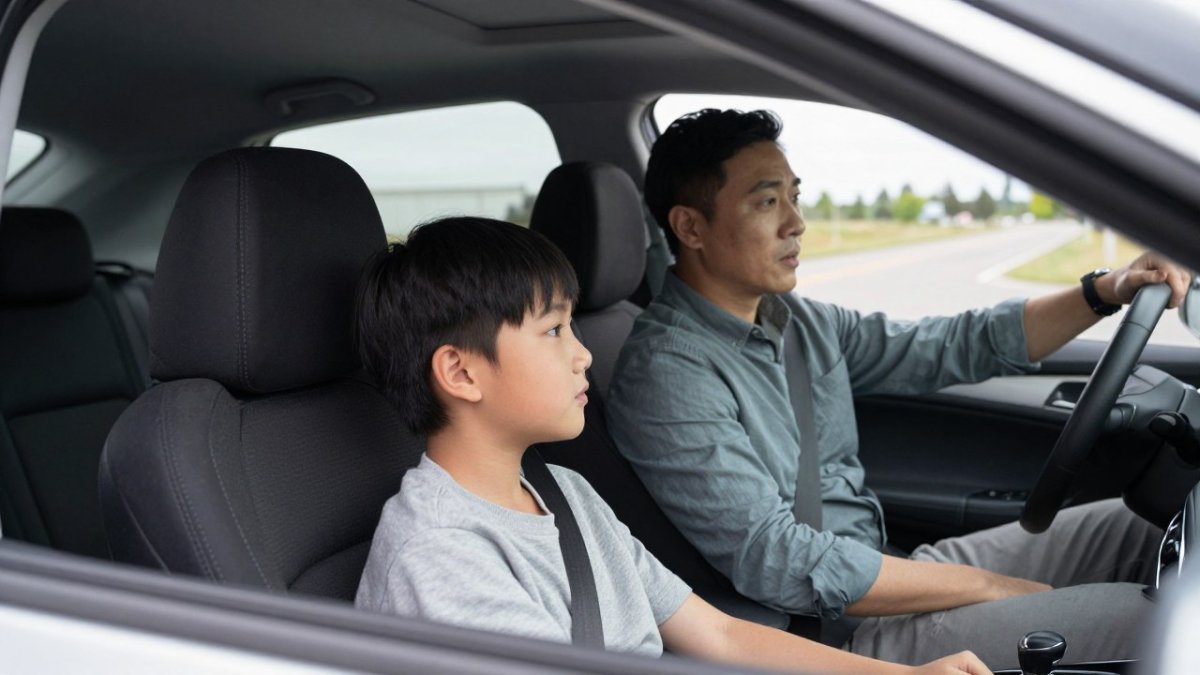
Focus your practice on the errors that cost you points, not on everything at once. Practise the same routes and manoeuvres until they feel routine.
- Observation and head checks at intersections, lane changes, and merges
- Speed control in school zones and residential streets
- Signalling early and consistently before every turn or lane change
- Parking and reversing in tight spaces, where examiners look closely
- Hazard awareness when pedestrians, cyclists, or buses are nearby
A learner who is nervous may benefit from a patient instructor who can build confidence over several sessions. Practise under conditions close to test day, including busy traffic and the same route type.
Focus your practice on the errors that cost points, starting with the areas examiners check most closely.
| Focus area | What to practise | Why it matters |
|---|---|---|
| Observation | Head checks at intersections, lane changes, merges | Errors here cost points |
| Speed control | School zones and residential streets | Examiners watch speed closely |
| Signalling | Signal early and consistently before turns | Applied before every turn or lane change |
| Parking and reversing | Tight spaces | Examiners look closely here |
| Hazard awareness | Pedestrians, cyclists, buses nearby | Shows safe judgement |
Finding Earlier Cancellations and Rescheduling Options
Some learners find an earlier test by watching for cancellations. Check the booking system regularly, especially on weekday mornings when slots are often released.
Rescheduling rules also matter. Review the notice period and any fees before you move an appointment, because late changes can cost you the slot entirely. If your current date is far off, ask whether an earlier opening exists before you give up your place.
Booking Your Next Road Test With Central Driving Academy
Retesting is much easier when you have a structured plan and an instructor who knows what examiners look for. At Central Driving Academy, we offer bilingual instruction in English and Farsi, a free in-person assessment, and a road test vehicle. Our flexible six-day availability and pick-up and drop-off service make it easier to fit lessons around work or school.
Start by booking a free in-person assessment to review where your last attempt went wrong. For current pricing and available times, contact Central Driving Academy directly.
Frequently Asked Questions
How long do you have to wait before retaking an ICBC road test?
The waiting period before a retake depends on your situation and the current ICBC rules, so check the official ICBC website for the most up-to-date requirements before you rebook. Your wait between attempts is separate from how long it takes to get an appointment. Even when you are allowed to retake right away, appointment availability can push your next test date further out. Plan your practice around both timelines so you are ready when a slot opens.
Does the waiting period depend on how many times you have failed?
Repeated failures can affect the rules that apply to your next attempt, so confirm the current requirements with ICBC after each result. Keep records of your test feedback and the date of each attempt, because these details will help you and your instructor focus your preparation. Each failed test is a chance to target the specific skills the examiner flagged rather than practising everything equally.
How do you book another ICBC road test after failing?
You book your retest through ICBC’s official booking channels once you are eligible under the current rules. Have your licence details and the test you failed ready before you start. Check available dates regularly, since cancellations can open earlier appointments. If a suitable date is not available, you can ask ICBC about other locations or times that may have openings.
What should you practise before retaking your road test?
Focus on the errors noted on your failed test, such as lane changes, shoulder checks, intersections, speed control, and parking. Practise in a range of traffic conditions, including busy roads and highways, so you feel comfortable in each. Central Driving Academy offers bilingual instruction in English and Farsi and provides a road test vehicle, and you can contact us for current pricing and availability.
