
Last Updated: November 21, 2026
Quick Summary
Yes, feeling scared of driving is normal, especially for new drivers, since some fear is a natural response to a task that carries real risk. It becomes a problem when it stops you from learning, leads you to avoid driving, or makes every trip feel overwhelming.
- Ask how much the fear is costing you, not just whether you feel it.
- Normal caution means checking mirrors and driving slower in rain; fear needing help means avoiding driving entirely.
- Start in an empty parking lot and move to busier roads only when each step feels manageable.
- Keep a confidence log recording fear levels before and after each drive, from 1 to 10.
- See a doctor if fear comes with panic attacks, low mood, or frightening thoughts.
Table of Contents
- Is It Normal to Be Scared of Driving?
- What Driving Anxiety Actually Means
- Driving Anxiety Symptoms to Recognize
- Common Causes of Fear Behind the Wheel
- Fear of Driving as a Beginner: Why It Happens and What Helps
- How to Overcome Fear of Driving, Step by Step
- Finding a Patient Driving Instructor for Nervous Drivers
- Booking Your First Calm Lesson at Central Driving Academy
- Frequently Asked Questions
Is It Normal to Be Scared of Driving?
Yes, it is normal to feel scared of driving, especially when you are new to it. Many new drivers feel nervous behind the wheel. Nerves are one of the most common feelings new drivers describe.
Feeling some fear is a normal response to a task that carries real risk. Being scared becomes a problem only when it stops you from learning, leaves you avoiding driving altogether, or makes every trip feel overwhelming.
A useful question is not “Am I scared?” but “How much is this fear costing me?” A short self-assessment can help you judge whether what you feel is ordinary caution or something that deserves support. Answer these six questions honestly:
- Frequency. How often do you feel fear around driving? Once in a while before a new route is different from most days, or every time you sit in the car.
- Persistence. Does the fear fade once you are moving, or does it stay high for the whole trip and linger afterward?
- Avoidance. Are you skipping drives, turning down plans, or finding excuses not to get behind the wheel?
- Physical symptoms. Do you get a racing heart, tight chest, sweating, shaking, or trouble breathing before or during a drive?
- Daily impact. Has fear affected work, school, appointments, or time with family and friends?
- Control. Can you talk yourself down and continue, or does the fear decide whether you drive?
Here is a simple way to tell the difference:
- Normal caution: You check your mirrors twice, drive a little slower in the rain, and feel a bit tense on the highway.
- Fear that needs help: You avoid driving entirely, your heart races before every drive, or you feel unable to start the car.
If your fear falls in the second group, a calm, patient approach can make a real difference. The steps below can help.
Watch out: self-assessment is a guide, not a diagnosis. If fear is paired with panic attacks, low mood, or thoughts that frighten you, speak with a doctor or other health professional rather than trying to push through alone.
What Driving Anxiety Actually Means
Driving anxiety is a strong feeling of worry or fear linked to operating a vehicle. Some people call it driving phobia. It can range from mild nerves to a fear that keeps someone off the road.
Driving anxiety is different from ordinary caution. A cautious driver watches the road and adjusts. An anxious driver often feels the fear before the drive even starts, and that fear can follow them into every trip.
Many people with driving anxiety are not reckless. They are often very careful. The worry comes from feeling that they cannot control what might happen.
Driving Anxiety Symptoms to Recognize
Driving anxiety can show up in both the body and the mind. Common signs include:
- A racing heart or tight chest before or during a drive
- Sweaty palms or shaking hands on the steering wheel
- Trouble breathing normally while driving
- Strong worry about highways, bridges or heavy traffic
- Thoughts of “What if I crash?” that will not go away
- Avoiding certain roads, times of day or trips altogether
If these symptoms happen often, affect your daily life, or make it hard to keep up with work, school or family duties, consider talking to a doctor or other health professional.
Common Causes of Fear Behind the Wheel
Driving fear rarely has just one cause. Some of the most common reasons include:
- Lack of experience: New drivers have not yet built the habits that make driving feel automatic.
- A past scare: A near miss or a minor collision can leave a lasting impression.
- A long break: Returning to driving after months or years away can feel strange and unfamiliar.
- Specific situations: Highways, merging, night driving and busy intersections often trigger fear.
- Pressure from others: Feeling rushed by a parent, friend or instructor can make nerves worse.
Knowing your main trigger is useful. It helps you decide where to start practicing.
Fear of Driving as a Beginner: Why It Happens and What Helps
Almost every new driver feels some nerves in the first few months. You are learning to judge speed, space and the actions of other drivers, all at once. That is a lot to handle. Read our article on driving lessons that build confidence for practical tips tailored to nervous beginners.
Fear often eases with practice. A few things help most:
- Start on quiet roads. Empty parking lots and residential streets give you room to focus.
- Practice in short sessions. Thirty minutes of calm practice beats two hours of stress.
- Build up slowly. Move to busier roads only when the quieter ones feel comfortable.
- Keep a calm passenger. A patient person beside you can lower the pressure.
Starting in quiet areas and adding challenges one at a time is a sensible way to build confidence.
How to Overcome Fear of Driving, Step by Step
Here is a practical plan you can follow. Move to the next step only when the current one feels manageable. The key is to define what “manageable” means before you start, so progress is measurable rather than a feeling. Read our full guide to overcoming driving anxiety as a beginner for more detail on each stage.
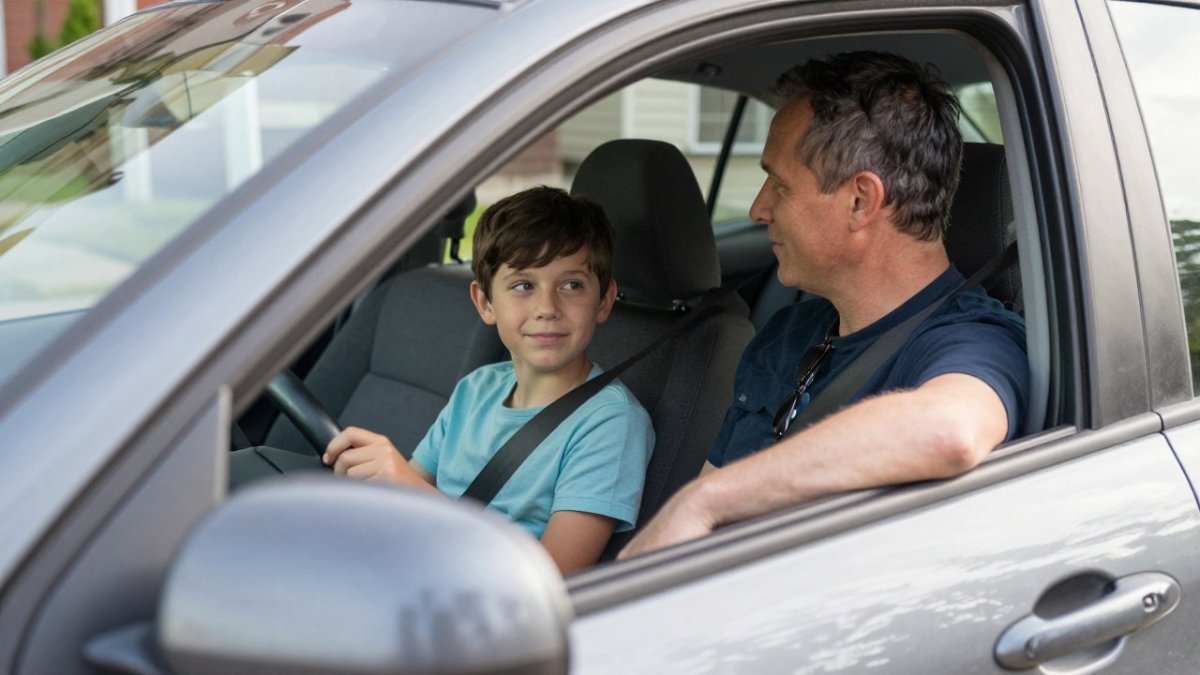
A simple approach is to stay at a step until you can complete it comfortably, and repeat the step rather than pushing forward if fear spikes.
- Sit in the parked car first. Adjust the seat, mirrors and steering wheel. Breathe slowly. Goal: five calm minutes with the engine off.
- Start the engine and sit for a few minutes. Notice your body without driving yet. Goal: engine on, hands on the wheel, fear steady.
- Drive in an empty lot. Practice turning, stopping and reversing at low speed. Goal: 15-20 minutes without a surge of panic.
- Move to a quiet residential street. Focus on steady speed and smooth braking. Goal: a full loop at the posted limit with no white-knuckle moments.
- Add light traffic. Try a route you already know well. Goal: complete the route at a busy-but-not-rushed time.
- Practice one harder skill at a time. Merging, roundabouts or highways each get their own session. Goal: one new skill per session, not three.
- Review after each drive. Note what went well before thinking about what to improve.
What to do if anxiety rises while driving: Safety comes first. Signal, check your mirrors, and pull over somewhere legal and safe, a parking lot, a side street, or a shoulder only if it is truly safe. Put the car in park. Take slow breaths, with a longer exhale than inhale.
Track your progress. Keep a simple confidence log with four columns: date, route, fear level before (1-10), fear level after (1-10), and one thing you did well. Over a few weeks, the log often shows progress that is hard to notice day to day. Expect setbacks, a bad drive after several good ones is normal and does not erase the work. If a particular route keeps triggering high fear, break it into smaller pieces rather than avoiding it entirely.
Match the support to your symptoms. A patient driving instructor is a good fit for beginner nerves, refresher practice, or test preparation. A therapist or counsellor is worth considering when fear is tied to a past collision, panic, or anxiety that shows up outside driving too. A family doctor can help rule out other causes and point you to public resources.
The article lays out a seven-step practice plan, with a clear goal for each stage.
| Step | What to do | Goal |
|---|---|---|
| 1. Sit in the parked car | Adjust seat, mirrors and wheel; breathe slowly | Five calm minutes, engine off |
| 2. Start the engine | Sit for a few minutes, hands on the wheel | Engine on, fear steady |
| 3. Drive in an empty lot | Practise turning, stopping and reversing at low speed | 15-20 minutes without panic |
| 4. Quiet residential street | Focus on steady speed and smooth braking | A full loop at the posted limit |
| 5. Add light traffic | Drive a familiar route at a not-rushed time | Complete the route calmly |
| 6. One harder skill at a time | Merging, roundabouts or highways each get their own session | One new skill per session |
| 7. Review after each drive | Note what went well before what to improve | Honest, positive review |
Finding a Patient Driving Instructor for Nervous Drivers
A good instructor makes a big difference for a nervous learner. Look for someone who is calm, explains things clearly and does not raise their voice when you make a mistake. You want to feel safe enough to ask questions. See our guide to driving lessons designed for nervous beginners to learn what to expect.
Ask any instructor you are considering:
- How do you help nervous students feel more comfortable?
- Can you tailor lessons to my pace?
- Do you offer lessons in a language I am most comfortable with?
Customers have praised the professionalism and teaching of Central Driving Academy’s instructors. Jordan Wong wrote that the instructor was “very professional, knowledgeable and was a great teacher.” Sriram Sharma shared that working with Farzin at Central Driving Academy was “one of the main reasons I passed.” If you are weighing your options, explore the benefits of private driving lessons for nervous drivers.
Booking Your First Calm Lesson at Central Driving Academy
If driving fear is holding you back, you do not have to face it alone. Central Driving Academy offers bilingual English and Farsi instruction, pick-up and drop-off at your location, six-day availability, and a free in-person assessment to plan your first steps. For current pricing, please check our website or contact us for a quote.
Fear of driving is common, and it can get better with the right support. Book your first calm lesson with Central Driving Academy and start building the confidence you need, one drive at a time.
Frequently Asked Questions
Is it normal to be scared of driving as a beginner?
Yes. Many new drivers feel nervous, especially in their first months behind the wheel, when traffic, merging, and unfamiliar road situations all demand attention at once. Fear is a normal response to a task that is new and carries real consequences. It becomes a concern when it stays intense for a long time, causes you to avoid driving altogether, or keeps you from doing everyday tasks. In those cases, structured lessons with a patient instructor and gradual practice usually help the fear ease over time.
Can driving anxiety go away on its own?
Sometimes it does, particularly when the original cause was a one-time event or a short stretch of inexperience. Gradual, repeated practice in low-pressure settings often reduces nervousness as familiarity grows. However, if avoidance is getting worse or the fear is affecting your work, school, or independence, it is less likely to fade without support. Working with a qualified instructor or a mental health professional can speed up progress and make the process feel more manageable.
When should I seek help for driving anxiety?
Consider getting help if your fear causes panic symptoms, leads you to skip necessary trips, or stops you from getting or keeping a licence. Support is also worthwhile if you have been driving for a while but the anxiety has not improved, or if it began after a collision or other frightening event. A driving instructor can help with practical skills and confidence. A therapist or doctor can help if the anxiety is more widespread or intense.
Should I take driving lessons if I am anxious?
Yes, lessons can help build confidence. A patient instructor can set the pace, choose quiet routes first, and gradually introduce harder situations such as highways or bridges. Look for an instructor who explains each step clearly and does not rush you. Central Driving Academy offers bilingual English and Farsi instruction for nervous learners. For current pricing and availability, please visit the Central Driving Academy website or request a quote.
