

Last Updated: October 25, 2026
Quick Summary
Driving lessons for seniors rebuild confidence and address age-related changes like slower reaction times and reduced night vision through structured practice with professional instructors. A typical refresher plan includes a low-pressure assessment, vehicle familiarization, targeted skill practice, real-world driving conditions, and ongoing maintenance sessions every three to six months.
- A senior driver evaluation identifies strengths and practice areas without being a pass-or-fail test.
- The refresher plan progresses through five steps: assessment, vehicle familiarization, targeted skills, real-world conditions, and maintenance.
- Lessons typically start in quiet residential areas before progressing to busier traffic and highways.
- Costs vary by school and location; ask for written quotes separating assessment fees, hourly rates, and test vehicle provision.
- Central Driving Academy offers flexible scheduling six days per week with certified instructors trained in senior-specific needs.
Table of Contents
- Why Seniors Benefit From Professional Driving Lessons
- Getting a Senior Driver Evaluation Before You Start
- What to Expect During Your First Lesson
- Refresher Driving Lessons for Seniors: A Practical Plan
- Understanding Driving Lesson Costs in BC
- Preparing for Your ICBC Road Test
- Booking Your Senior Driving Lessons Today
- Frequently Asked Questions
Why Seniors Benefit From Professional Driving Lessons
Getting behind the wheel after years of driving, or returning after a break, can feel overwhelming. Your reflexes change. The roads have new markings. Technology in vehicles has evolved. Professional driving lessons for seniors aren’t about learning to drive from scratch. They’re about rebuilding confidence and adapting to how you actually drive now.
Many seniors hesitate to take formal lessons, assuming they already know how to drive. But there’s a critical difference between driving and driving safely in today’s environment. Professional instruction addresses age-related changes directly, slower reaction times, reduced night vision, stiffness that affects shoulder checks, and teaches strategies to compensate, not criticize.
Confidence matters more than you might think: nervous drivers make hesitant decisions, and hesitation creates risk. Working with a professional who understands senior-specific needs rebuilds confidence through structured practice and techniques that work with how your body and mind function today.
Getting a Senior Driver Evaluation Before You Start
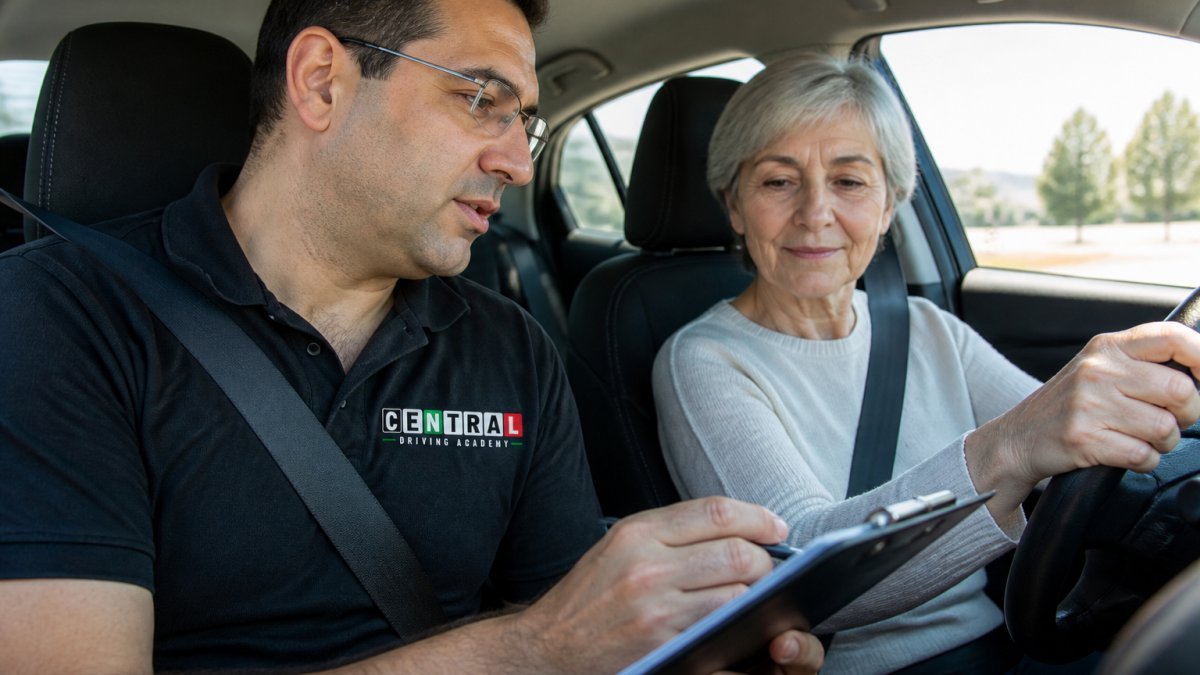
Before booking driving lessons for seniors, a professional evaluation tells you exactly where you stand. It isn’t a pass-or-fail test but a baseline assessment identifying your strengths and the areas where practice will help most.
A senior driver evaluation identifies your strengths and the areas where practice will help most. It involves actual driving, where an instructor observes merging, parking, intersections, and responses to unexpected situations.
The evaluation serves two purposes. It gives you concrete information about whether your concerns are justified, and it gives your instructor a roadmap. If parking is your weak point but highway driving is solid, lessons focus there, you’re not paying for practice you don’t need.
Family members often push for an evaluation because they’re worried. An objective professional assessment either confirms those concerns or reassures everyone that you’re safe to drive with minor adjustments. Either way, you have facts instead of worry.
What to Expect During Your First Lesson
Your first driving lesson for seniors won’t feel like a test. A good instructor creates a calm environment where you can focus on driving, not on being judged.
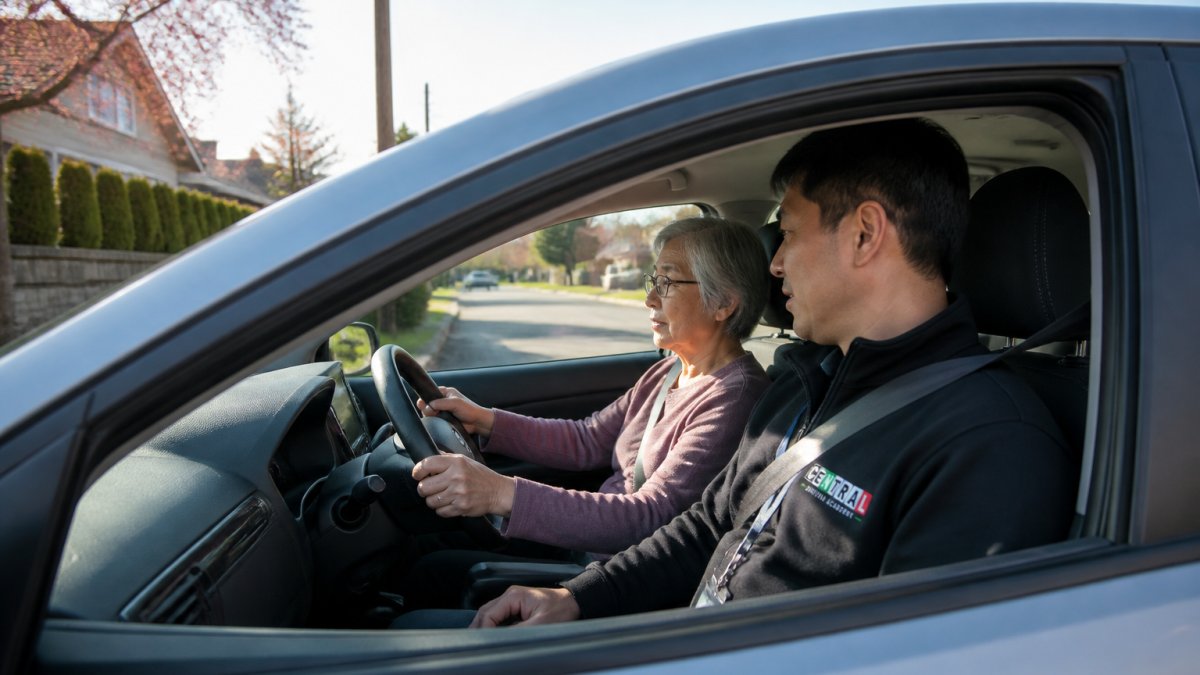
The lesson typically starts with a conversation, not immediate driving. Your instructor will ask about your driving history, what worries you most, and what you want to improve, then explain how the lesson works.
Next, your instructor walks you through the vehicle: the controls, the braking system, the warning lights.
Then you drive, starting in a quiet residential area rather than rush-hour traffic or a highway. Find the best driving schools in your area to ensure you’re working with a reputable instructor before your first lesson.
Many seniors find one lesson builds enough confidence to book the next.
[Best for seniors seeking to rebuild confidence after a driving break or address age-related concerns.
Refresher Driving Lessons for Seniors: A Practical Plan
A senior refresher plan should start with a low-pressure assessment, then build skills in short, spaced sessions that account for fatigue, vision changes, mobility limitations, and confidence. The goal isn’t a fixed syllabus but a repeatable loop: assess, practice one target skill, rest, review, repeat.
Step 1: Low-pressure assessment (60-90 minutes)
Begin with an in-person or on-road evaluation. The assessment should identify two or three priority skills, not a long list. You should leave with a written summary of strengths and target areas.
Step 2: Vehicle familiarization and comfort (1-2 sessions)
Before practicing maneuvers, spend time with the controls: seat and mirror adjustment, signals, wipers, headlights, defroster, parking brake, and driver-assistance features such as backup cameras or blind-spot monitors. Understanding what these do, and don’t replace, reduces confusion. Practice smooth acceleration and gentle braking in an empty lot or quiet block.
Step 3: Targeted skill practice (3-6 sessions)
Work on the priority skills from the assessment: shoulder checking with limited neck mobility, lane positioning, merging, left turns across traffic, and parking. Use short, focused repetitions, a 60-minute lesson with two or three skill blocks beats a 90-minute session that ends in fatigue. Your instructor should give specific, observable feedback (for example, “Check your mirror before you signal, not after”) and note progress each session.
Step 4: Real-world conditions (2-4 sessions)
Add complexity gradually: light traffic, busier intersections, highway merging, night driving if relevant, and bad-weather driving if you expect to drive in winter. Practice the routes you actually drive, grocery store, medical appointments, family visits, so the skills transfer directly. If anxiety is a factor, agree on a “pause and reset” signal you can use at any time.
Step 5: Independence and maintenance (ongoing)
Once core skills are consistent, shift to periodic check-ins rather than weekly lessons, commonly one refresher session every three to six months, or before a long trip or seasonal change. Keep a simple log of what you practiced and what still feels difficult to guide what comes next.
This progression is flexible: some drivers need more time on fundamentals, others move faster. Base each step on observed performance, not a fixed calendar. If a medical condition or medication change occurs, pause and reassess with your instructor and health professional before continuing.
Ask your instructor to write down the two or three skills you should practice between lessons. Short, repeated practice in low-stress conditions builds more confidence than one long session.
A structured refresher plan typically progresses through five steps, each building on the previous one.
| Step | Duration | Focus |
|---|---|---|
| Low-pressure assessment | 60-90 minutes | Identify two or three priority skills |
| Vehicle familiarization | 1-2 sessions | Controls, mirrors, driver-assistance features |
| Targeted skill practice | 3-6 sessions | Priority skills with specific feedback |
| Real-world conditions | 2-4 sessions | Light traffic, highways, night driving |
| Independence and maintenance | Ongoing | Check-ins every three to six months |
Understanding Driving Lesson Costs in BC
Pricing for senior driving lessons varies. Because rates vary by school, instructor experience, and location, ask for a written quote that separates each component.
Hourly lessons
Ask whether the hourly rate includes pick-up and drop-off or whether those are extra.
Package pricing
Before committing, ask: What happens if I cancel or reschedule? Is it refundable if I stop? Does it include a vehicle for the ICBC road test, or is that a separate fee?
Assessment and evaluation fees
A senior driver evaluation may be priced separately from lessons. Ask what it includes: an on-road component, and a written summary.
Vehicle provision for the ICBC road test
If you do not have a vehicle that meets ICBC requirements, you may need to use the school’s vehicle for the test.
What affects the total cost
The total investment depends on how many lessons you need, pick-up and drop-off, whether you need a test vehicle, and how often you practice.
Questions to ask before you book
- What is the hourly rate, and what is included?
- Is there a discount for a package, and what are the terms?
- How long is the assessment, and what does it cover?
- Do you provide a vehicle for the ICBC road test, and is it included?
- What is your cancellation policy?
- Are instructors certified, and how do you handle senior-specific needs such as mobility limitations or anxiety?
For current pricing specific to your situation, contact Central Driving Academy directly.
Be cautious of any school that will not provide a written quote or explain what is included in a package. Transparent pricing is a sign of a professional operation.
Preparing for Your ICBC Road Test
Your ICBC road test is the formal assessment that determines whether you’re licensed to drive. For seniors returning to driving or testing after a long break, preparation is essential.
The test covers several core competencies: vehicle control, hazard perception, decision-making, and rule compliance. You’ll drive through residential areas, busier streets, and possibly highway sections. The examiner watches how you handle the vehicle, respond to traffic, and follow road rules.
Common areas where drivers stumble: smooth braking, mirror checks, and positioning. Seniors sometimes struggle with decision-making speed in busier traffic. That’s normal, practice until basic decisions become automatic.
Preparation involves three elements. First, know the rules. Second, practice the specific maneuvers: three-point turns, parking, lane changes, merging. Third, drive in conditions similar to your test.
[Best for seniors who’ve already completed several driving lessons and are ready to focus specifically on test requirements. Skip if you’re still building basic confidence, finish fundamental skills first, then shift to test preparation.]
For comprehensive strategies tailored to current ICBC standards, book a road-test preparation lesson with an instructor who understands the specific checkpoints examiners focus on.
Booking Your Senior Driving Lessons Today
Booking your first lesson is often the hardest part. You might worry about cost, comfort with an instructor, or whether lessons will help. These concerns are normal, most seniors who take professional driving lessons for seniors report the investment paid off in restored confidence and safer habits.
When you’re ready to book, contact the driving school and describe your situation: how long since you last drove regularly, your concerns, and your goals. The school will ask about your schedule and pick-up and drop-off needs, explain lesson structure and pricing, then book your first appointment.
Before your first lesson, gather your documents: your driver’s license (even if expired or suspended, it confirms your identity) and any medical records relevant to driving, such as vision test results or doctor’s notes about physical limitations. Your instructor needs this context to tailor the lesson.
Central Driving Academy offers flexible scheduling six days per week, bilingual instruction in English and Farsi, and free in-person assessments so you know exactly where you stand. We provide a dual-controlled vehicle for lessons and can arrange the vehicle for your ICBC road test. Our certified instructors, trained under the Motor Vehicle Act, focus specifically on building confidence in senior drivers, they understand your concerns and the adjustments that work best for your stage of life.
The reality is simple: driving lessons for seniors aren’t a luxury. They’re an investment in your independence, safety, and peace of mind. When you drive with confidence backed by solid skills, you drive safer, enjoy the road more, and maintain the independence that matters in your daily life.
Frequently Asked Questions
How much do driving lessons for seniors cost in BC?
Pricing for driving lessons for seniors varies based on lesson duration, and whether you need a vehicle for your road test. Contact Central Driving Academy for a personalized quote tailored to your needs.
What should I expect during a senior driver evaluation?
A senior driver evaluation assesses your current driving skills, identifies areas for improvement, and determines how many lessons you’ll need. The instructor observes your vehicle control, hazard perception, confidence level, and knowledge of rules of the road. This free in-person assessment helps create a personalized lesson plan that addresses your specific concerns, whether that’s parking, highway driving, or navigating busy intersections.
Can driving lessons help me feel more confident on the road?
Yes. Refresher driving lessons for seniors rebuild skills you may not use regularly and address anxiety about specific situations like night driving or heavy traffic. Working with a patient, certified instructor who understands age-related changes in vision and reaction time creates a supportive environment. Many seniors report significantly increased driving confidence and independence after completing their lesson plan.
How many lessons might I need to pass my ICBC road test?
The number of lessons depends on your current skill level and how long you’ve been away from regular driving. Your initial assessment will give a clear estimate. Central Driving Academy provides the dual-controlled vehicle for your actual road test.
Your next step is straightforward. Book a senior driving lesson in Coquitlam with Central Driving Academy and let an instructor assess exactly where you stand. You’ll leave that first session with a clear picture of your strengths, the specific areas where practice helps most, and a concrete plan to rebuild your confidence behind the wheel.
