Table of Contents
- Understanding International Student Driver’s Licence Requirements
- Your Path to a Canadian Driver’s Licence: Step by Step
- How to Choose a Driving School for International Students
- Understanding Driving Lesson Costs and Budgeting
- Road Test Preparation for New Drivers
- Common Challenges and How to Overcome Them
- Frequently Asked Questions
Last Updated: October 13, 2026
Understanding International Student Driver’s Licence Requirements
Getting your driving licence in a new country feels overwhelming, different rules, roads, and terminology. But the process is straightforward once you know what applies to you.
As an international student, your path to a Canadian driver’s licence depends on your home country’s licence and your province of study.
The key is understanding where you fit in your province’s graduated licensing system, which limits what new drivers can do at each stage.
Graduated Licensing in Your Province
Graduated licensing is a multi-stage system new drivers move through over time, with different rules at each stage about passengers, roads, and phone use.
Most provinces in Canada use three stages:
- Learner stage: You must have a licensed driver with you. Usually that driver must be 25 or older and sit in the front seat.
- Intermediate stage: You can drive alone, but certain restrictions still apply. No passengers under a certain age, no driving late at night, no handheld devices.
- Full licence stage: You have all driving privileges.
The timeline varies by province, and some let you advance faster with an approved driving course. That’s where professional driving lessons for international students become valuable, they speed up the process and prepare you for your road test.
Your home country’s licence might let you skip the learner stage entirely, but you still need to learn your new province’s road signs, traffic laws, and driving culture.
Using a Foreign Licence or International Driving Permit
How long you can drive on a foreign licence depends on your province:
- Some provinces allow 3 months
- Some allow 6 months
- Some allow up to one year
Your international driving permit (IDP) is a translation of your home licence, not a separate licence.
Convert your foreign licence to a local one before that window closes.
At Central Driving Academy, we explain which documents you need, which stage you’ll enter, and how to prepare for your road test.
Your Path to a Canadian Driver’s Licence: Step by Step
The journey from arrival to a valid driving licence has clear stages. Understanding each step helps you plan your timeline and budget.
Step 1: Get Your Learner’s Permit
Your first official step is getting a learner’s permit, which lets you practice driving legally with a licensed instructor or approved driver beside you.
To get your learner’s permit, you’ll need to:
- Bring proof of residency (a utility bill, lease, or letter from your school)
- Bring your passport and study permit
- Pass a knowledge test about road signs, traffic laws, and safe driving practices
- Pay the application fee
The knowledge test covers local road rules, not just signs, speed limits, right-of-way, and intersections. Many international students find it easier if they study the official provincial handbook beforehand.
Some provinces let you take the knowledge test in multiple languages, check with your provincial licensing authority. Testing in your preferred language reduces stress.
Once you pass, you get your learner’s permit and can legally practice. This is when driving lessons for international students become essential: a professional instructor teaches you the road markings, traffic patterns, and safety habits local drivers expect.
Step 2: Complete Your Driving Lessons
Professional driving lessons do more than help you pass your road test, they teach you to drive safely in your new environment, build confidence, and explain why certain rules exist.
A typical driving lesson package includes:
- In-class instruction: Road signs, traffic laws, hazard recognition
- Behind-the-wheel instruction: Actual driving practice in real traffic
- Defensive driving techniques: How to anticipate other drivers’ moves
- Road test preparation: Mock tests that simulate the actual test
The number of lessons you need depends on your experience: fewer if you’ve driven at home, more if you’re new to driving entirely.
International students often benefit from bilingual instruction.
Step 3: Practice and Prepare for Your Road Test
After your lessons, practice with a licensed adult (usually your instructor or a friend 25 or older) to build muscle memory and confidence.
Practice driving should include:
- Different times of day (morning, afternoon, evening)
- Different weather conditions (rain, fog, snow if applicable)
- Different road types (residential streets, highways, busy intersections)
- Situations that make you nervous (parallel parking, heavy traffic, roundabouts)
Your instructor will tell you when you’re ready. Don’t rush: a road test costs money, and failing costs more money and time. Better to practice longer and pass on your first attempt.
Many international students worry about the road test, that’s normal.
How to Choose a Driving School for International Students
Not all driving schools are equal. Choosing the right one makes the difference between a confident, safe driver and a frustrated one.
Verify Instructor Credentials and Certification
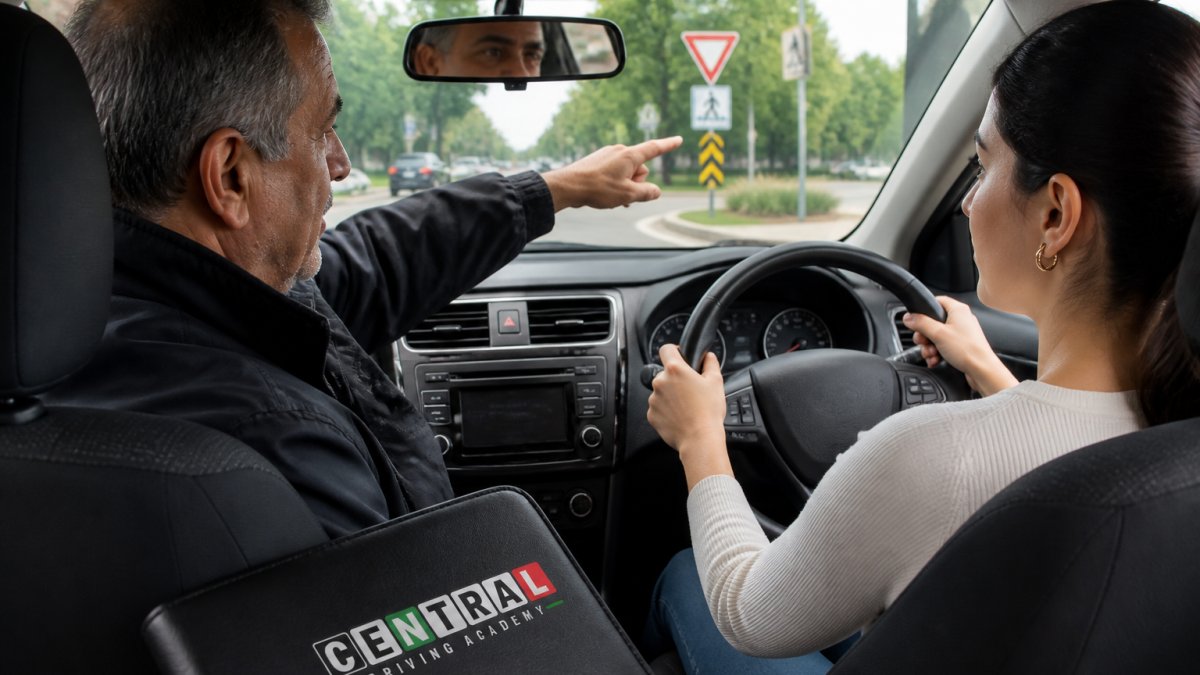
Before booking your first lesson, check your instructor’s credentials. In most provinces, driving instructors must be certified under the Motor Vehicle Act, meaning they’ve met training standards and passed background checks.
Ask your driving school directly:
- Are your instructors certified under the Motor Vehicle Act?
- How long have they been teaching?
- Do they specialize in working with international students?
- What’s their approach to nervous or anxious drivers?
A certified instructor isn’t just someone who drives well, they know how to teach, break complex skills into manageable steps, and stay patient when a student struggles.
At Central Driving Academy, all our instructors are certified under the Motor Vehicle Act and specialize in working with international students, adapting to new road rules, building confidence in unfamiliar traffic, and managing language barriers.
Look for Bilingual or Language-Friendly Instruction
If English isn’t your first language, bilingual instruction changes everything. A bilingual instructor explains traffic rules in a way that makes sense to you and helps you adapt to local differences.
Bilingual driving lessons for international students aren’t just translation, they’re cultural understanding.
When you call a driving school, ask directly: “Do you have instructors who speak [your language]?” If not, keep looking, many schools near large international student populations offer multilingual instruction.
Check for Road Test Vehicle Provision and Flexibility
Many international students need a vehicle for their road test but don’t own one. Some driving schools provide their own vehicles; others don’t. This matters.
Ask your driving school:
- Do you provide a vehicle for the road test, or do I need to arrange one?
- If I need my own vehicle, what requirements must it meet?
- Can you provide a vehicle if I’m ready for my test but don’t have access to one?
- How flexible is your scheduling for lessons and test preparation?
A school that provides a road test vehicle removes a major barrier: you don’t have to borrow or rent a car, and you practice in the same vehicle you’ll test in, reducing stress on test day.
Flexibility matters too. As a student, your schedule changes with exam periods and unpredictable work shifts. A driving school with six-day availability and flexible scheduling works around your life.
Understanding Driving Lesson Costs and Budgeting
Driving lessons, road tests, and licensing all cost money. Knowing what to expect helps you budget and avoid surprises.
What Affects Lesson Pricing
Factors that influence driving lesson costs:
- Number of lessons: More lessons cost more but raise your chances of passing first time.
- Lesson length: Longer lessons cost more but give more practice time.
- Instructor experience: Specialized instructors charge more but deliver better results.
- Location: Urban areas and longer travel times cost more.
- Vehicle type: Automatic versus manual transmission pricing varies.
- Bilingual instruction: Bilingual driving lessons for international students may cost slightly more, but they’re worth it if you need that support.
For current Central Driving Academy pricing, check our website or call for a quote. Pricing depends on which lessons you book, how many you need, and your situation.
Budgeting for Your Complete Licensing Path
Your total budget covers multiple expenses:
- Learner’s permit application fee
- Knowledge test fee
- Driving lessons (multiple lessons)
- Road test application fee
- Road test vehicle rental (if needed)
- Practice time and fuel
- Retesting fees (if you don’t pass on the first attempt)
International students often underestimate the total cost: a single set of lessons may cost less than you expect, but the full journey from learner’s permit to full licence involves multiple fees.
Budget conservatively: if you plan ten lessons, budget for twelve, and set aside a retesting fee just in case. This removes financial stress if things take longer than expected.
Road Test Preparation for New Drivers
Your road test is the final hurdle, when everything you’ve learned comes together. Preparation is everything.
Essential Skills Your Instructor Will Teach
A professional instructor focuses on the skills that actually appear on your road test:
- Vehicle control: Smooth acceleration, braking, and steering
- Observation: Checking mirrors, looking over your shoulder, scanning the road ahead
- Hazard recognition: Spotting potential dangers before they become problems
- Right-of-way rules: Understanding who has priority at intersections and complex traffic situations
- Parking: Parallel parking, angle parking, and parking in tight spaces
- Highway driving: Merging, lane changes, and driving at higher speeds
- Night driving: Adjusting to reduced visibility and using headlights correctly
- Defensive driving: Anticipating what other drivers might do and staying safe
Your instructor will drill these skills repeatedly, point out mistakes constructively, and explain why each matters. By test time, they should feel automatic.
Mock Tests and Final Practice
Many driving schools for international students include mock tests in their packages. If yours doesn’t, ask, a mock test costs money but removes the fear of the unknown.
After your mock test, focus remaining practice on weak areas, parallel parking, highway merging, whatever stressed you. Targeted practice beats general driving.
On test day, arrive early with all required documents. You’ve prepared and practiced; the examiner just wants to see you drive safely and consistently.
Common Challenges and How to Overcome Them
Challenge: Understanding local road rules that differ from your home country
Solution: Ask your instructor to highlight differences between driving at home and here.
Challenge: Language barriers during lessons and testing
Solution: Choose a bilingual instructor if possible.
Challenge: Anxiety and nervousness about driving in unfamiliar traffic
Solution: Start in quiet areas and build confidence gradually before tackling busier traffic.
Challenge: Scheduling lessons around your student commitments
Exams, work, and other responsibilities make consistent practice difficult, which slows skill development.
Solution: Find a driving school with flexible scheduling.
Getting your Canadian driver’s licence as an international student is achievable.
At Central Driving Academy, we’ve helped many international students navigate this journey. Our certified instructors offer bilingual driving lessons in English and Farsi, free in-person assessments, a road test vehicle so you practice in the car you’ll test in, and flexible scheduling.
Frequently Asked Questions
Can an international student get a driving licence in Canada?
Yes, international students can obtain a full driver’s licence. You’ll start with a learner’s permit by passing a knowledge test, then complete behind-the-wheel instruction and pass a road test. The process takes weeks to months depending on how quickly you complete your lessons and practice. Each province has its own graduated licensing system with specific requirements and timelines.
What documents should an international student bring to driving lessons?
Bring your learner’s permit, valid passport or travel document, and proof of your study permit status. Your driving school may also require proof of address. If you hold a foreign driving licence or international driving permit, bring it as well, some provinces allow credit toward your licensing requirements. Contact your school beforehand to confirm all required documents.
How many driving lessons should an international student take before a road test?
Most international students benefit from 15-25 hours of professional instruction combined with additional practice. However, the exact number depends on your prior driving experience, comfort level, and how quickly you master local road rules and driving styles. A good instructor will assess your progress and recommend when you’re ready to book your road test.
What should I look for in a patient driving instructor?
Choose an instructor certified under the Motor Vehicle Act with proven experience teaching nervous or beginner drivers. Look for someone who listens to your concerns, explains instructions clearly, and adapts their teaching style to your pace. Read reviews from other students, ask about their approach to anxious learners, and request a free assessment to see if you’re comfortable with their teaching style before committing to lessons.