
Last Updated: November 12, 2026
Quick Summary
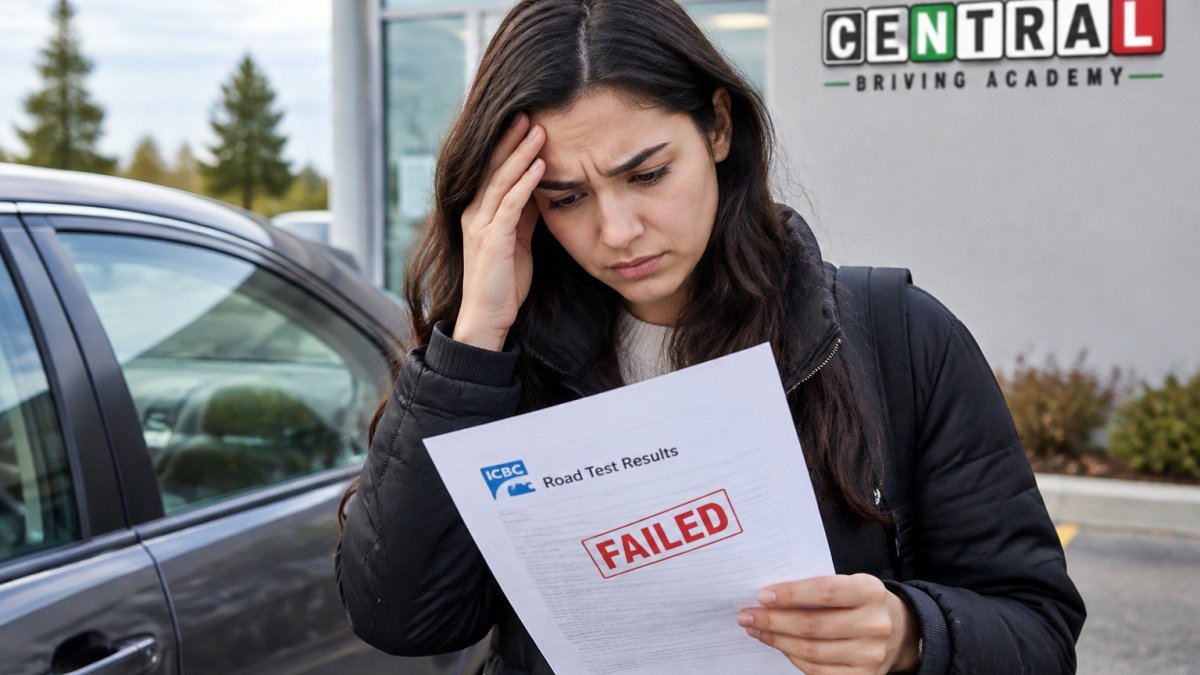
If you fail ICBC road test, the examiner will explain the result and go over the assessment form, so you know which errors were serious and which were minor. You can then rebook after the required waiting period, and the article notes that retest fees and cancellation charges apply.
- The examiner reviews the assessment form, so ask for a copy or photograph it.
- Sort errors into one-time slips, repeated mistakes, and serious or dangerous errors.
- Serious errors can end a road test early, so avoiding them matters most.
- Confirm the current waiting period for your licence class before rebooking.
- Each retest carries a fee set by ICBC, and cancellations can trigger a charge.
Table of Contents
- What the Examiner Tells You Immediately After a Failed Road Test
- How Many Mistakes Lead to Failure: Minor Errors Versus Serious Ones
- How to Rebook Your ICBC Road Test Step by Step
- Waiting Periods, Retest Fees and Cancellation Costs
- Does Failing Affect Your Licence, Restrictions and Driving While You Wait?
- Class 7 Versus Class 5: Does the Retest Differ?
- Using Examiner Feedback to Prepare for Your Next Attempt
- Booking Your Retest Lessons With Central Driving Academy
- Frequently Asked Questions
What the Examiner Tells You Immediately After a Failed Road Test
When the drive ends and the examiner delivers an unsuccessful result after a fail ICBC road test, the next few minutes matter more than most learners expect. The examiner will usually walk you through the result, and that conversation is where you can get useful material for your next attempt.
Here is the typical sequence:
- The result is stated clearly. The examiner tells you the test was unsuccessful and identifies whether the failure came from one serious or dangerous error or from the accumulation of minor errors.
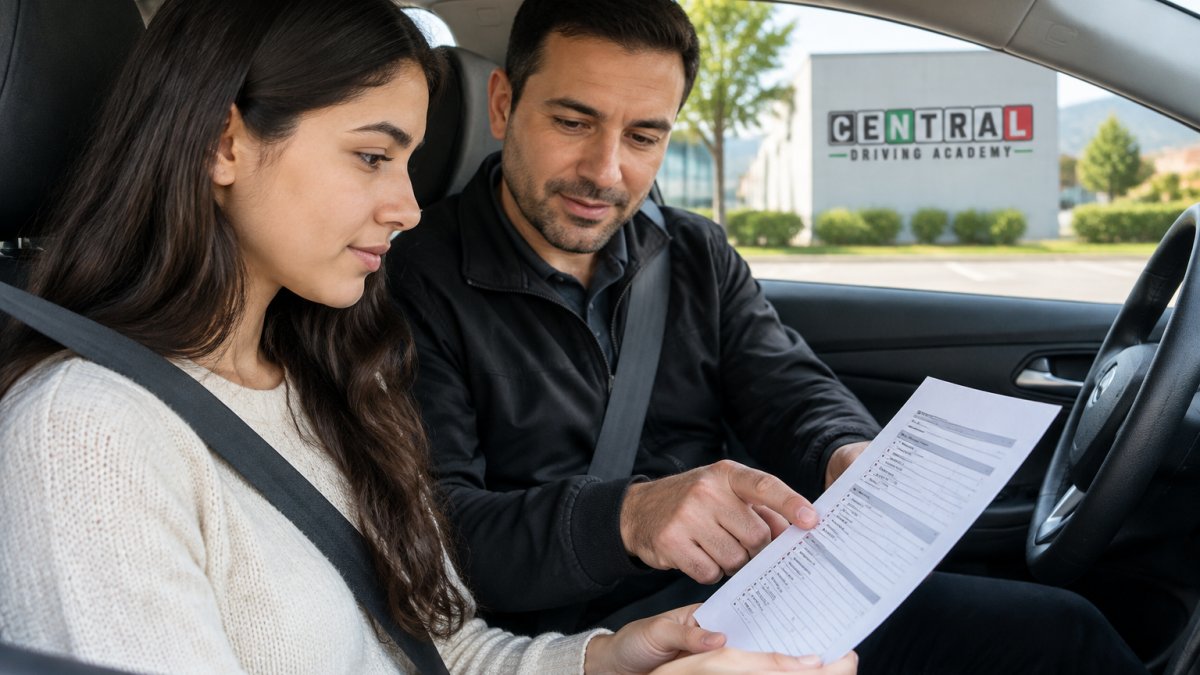
- The assessment form is reviewed. The test is scored on a standard assessment form. The examiner goes over the specific errors recorded during the drive, often pointing to the section of the form where each one appears.
- You get a chance to ask questions. Keep this brief and factual. Ask which errors were marked serious, which were minor, and whether any single error ended the test early.
- The form is yours to keep or photograph. Ask whether a copy is available. This document can be a useful study aid.
- You leave with your existing licence status unchanged. An unsuccessful road test does not automatically cancel a learner’s licence, but confirm any conditions before you drive again.
A common pattern is that learners remember only the headline (“I failed”) and forget the specifics by the time they get home. Write down the examiner’s points in the parking lot while they are fresh, including the exact wording used for each error.
Watch out: do not argue with the examiner or ask for a re-mark at the curb. The result is final for that attempt, and a tense exchange only makes it harder to absorb the feedback you actually need.
Once you have the form in hand, sort the errors into three buckets: one-time slips, repeated mistakes, and serious or dangerous errors. If you need a car for the retest, see how to rent a car for your ICBC road test. That sort becomes the backbone of your practice plan, which is covered later in this article.
How Many Mistakes Lead to Failure: Minor Errors Versus Serious Ones
Not every mistake carries the same weight. Errors fall into two broad groups.
- Minor errors are small slips that do not put anyone at risk, such as a late shoulder check or driving a little too slowly.
- Serious or dangerous errors are critical faults, such as running a red light, failing to yield, or losing control of the vehicle.
Serious errors can end a road test early, so avoiding those errors matters most. Minor errors add up over the course of the drive. The exact number of minor errors that leads to failure is set by ICBC’s assessment standards, so check the current official guidance.
A common mistake is trying to memorize a number. Focus instead on driving safely from start to finish.
How to Rebook Your ICBC Road Test Step by Step
Rebooking is straightforward when you follow a clear order.
- Check your licence status. Confirm that your learner’s licence is still valid.
- Wait out any required period. Check the current waiting period for your licence class before you rebook.
- Log in to the booking system. Use your ICBC account or the booking channel listed on the official site.
- Choose a date and time. Pick a slot that gives you enough time to practise.
- Confirm and save your booking. Keep the confirmation details somewhere easy to find.
Give yourself some extra practice time before the new date, since rushing into a retest can lead to repeat errors.
Waiting Periods, Retest Fees and Cancellation Costs
This is the section most learners skim for numbers, so here is how the mechanics actually work, with the caveat that ICBC can adjust amounts and intervals. Confirm current figures on ICBC’s official road test information before you book.
Waiting periods by licence class and attempt. ICBC sets a minimum interval between road test attempts, and the interval can differ depending on whether you are testing for a Class 7 learner stage or a Class 5 full licence. The rule is not a single fixed number for every candidate: it depends on your licence stage and how many attempts you have already made. Rather than rely on a friend’s recollection, check the current interval for your exact class on ICBC’s site or ask when you book. A common pattern is that the wait is short after a first unsuccessful attempt and lengthens after repeated attempts, so plan your practice schedule around the date you are actually eligible, not the date you feel ready.
Retest fees. Each road test attempt carries a fee, and you pay again for every retest. The amount is set by ICBC and can change, so treat any figure you hear secondhand as out of date until you confirm it. Budget for the test fee itself plus any costs around it.
Cancellation and no-show charges. Missing a booked appointment or cancelling late can trigger a charge, and in some cases it can also affect how soon you can rebook. If you are unsure whether you will be ready, it is usually cheaper to cancel within the allowed window than to no-show.
Costs beyond the test fee. The test fee is rarely the whole bill. Common add-ons include:
- Vehicle rental for the test, if you do not have a suitable vehicle.
- Optional lessons or a pre-test assessment with a driving school.
- Travel and time off work for the appointment itself.
A simple way to plan: set a reminder for the first date you are eligible to rebook, put the current test fee and any cancellation window in the same note, and schedule practice sessions between now and then. That way the waiting period works for you instead of catching you unprepared.
Watch out: booking the earliest possible slot before you have addressed the errors on your assessment form is one of the most common ways learners pay a second retest fee for the same mistakes.
The article does not give fixed figures for these costs, so the table below lists only what it says about each item.
| Item | What the article says | Note |
|---|---|---|
| Waiting period | Set by ICBC; differs by licence class and number of attempts | Check current interval for your class |
| Retest fee | Charged for every attempt; set by ICBC | Confirm the current amount |
| Cancellation or no-show | Can trigger a charge; may affect rebooking | Cancelling in the allowed window is usually cheaper |
| Vehicle rental | Cost if you lack a suitable vehicle | Add to test fee |
| Optional lessons | Pre-test assessment or lessons with a driving school | Optional |
| Travel and time off | Cost of getting to the appointment | Plan ahead |
Does Failing Affect Your Licence, Restrictions and Driving While You Wait?
Check your licence paperwork for the restrictions that apply to your learner’s licence, and confirm with ICBC whether a failed test affects your current status.
Read your licence carefully. Restrictions differ by stage, and breaking them can lead to penalties. If you are unsure whether you can drive alone, check with ICBC before you get behind the wheel.
Class 7 Versus Class 5: Does the Retest Differ?
Licence classes and the steps required for each test can differ, so confirm the requirements for your class with ICBC before you book.
If you are unsure which test you are taking, look at the licence stage on your paperwork or confirm with ICBC. Booking the wrong test wastes time and money.
Using Examiner Feedback to Prepare for Your Next Attempt
Your examiner’s notes are a roadmap. Start by sorting every mistake into one of three groups: mistakes you made once, mistakes you made several times, and serious errors.
Practise the most repeated errors first. If you forgot to check your mirrors at every lane change, spend a full session on that single skill. Then drive a route with lots of lane changes and check the boxes as you go.
For example, you might practise with a friend in a quiet parking lot before driving busy streets. Many learners also find that short, frequent sessions work better than one long drive.
Here is a simple practice checklist:
- Shoulder check before every lane change
- Full stop at every stop sign and line
- Smooth speed control, neither too slow nor too fast
- Clear signals well before each turn
- Correct right-of-way at every intersection
Booking Your Retest Lessons With Central Driving Academy
Many learners want a structured plan before the retest. At Central Driving Academy, our instructors work on driving skills with patient, clear feedback. We offer instruction in English and Farsi, flexible scheduling across six days, and pick-up and drop-off options for busy students.
We offer a free in-person assessment, and road test vehicle provision is available when needed. Pricing depends on the lesson plan you choose, so please visit our website for current rates and to book your retest lessons.
Ready to take the next step? Book your lessons with Central Driving Academy and approach your retest with a clear plan and real confidence.
Frequently Asked Questions
What happens after you fail an ICBC road test?
After a failed road test, the examiner reviews the errors with you and you receive a result showing the mistakes that led to the decision. You can rebook once you are ready, and you will generally need to wait a set period before the retest. Check your current licence conditions with ICBC before you keep driving. Review the examiner’s feedback before you rebook so your next attempt targets the specific errors that caused the failure.
How soon can you retake an ICBC road test after failing?
ICBC requires a waiting period before a retest, and the length can depend on how many attempts you have already made. Check the current booking rules on the ICBC website or when you book, since the timing can change. Use the waiting period to practise the skills flagged by the examiner, such as shoulder checks, lane changes, speed control and intersections. Booking your retest only after you feel consistently prepared usually saves money and stress.
Do you have to pay again if you fail an ICBC road test?
Yes, a retest normally requires a new fee each time you book. Fees for each attempt, and any charges for cancelling or rescheduling with short notice, are set by ICBC and can change, so confirm the current amounts before you book. Keep in mind that retest costs are not limited to the test fee itself: lesson hours, practice time and a vehicle for the test can add up. Preparing thoroughly before each attempt is the most effective way to limit those extra costs.
Can you find out why you failed an ICBC road test?
Yes. The examiner explains the errors that led to the result at the end of the test, and you should ask questions while the details are fresh. Write down each mistake, whether it was a minor error or a serious one, and the situation in which it happened. A professional instructor can then help you turn that feedback into a targeted practice plan. Central Driving Academy offers bilingual English and Farsi instruction to help you understand the feedback and prepare for your retest.
