

Last Updated: November 8, 2026
Quick Summary
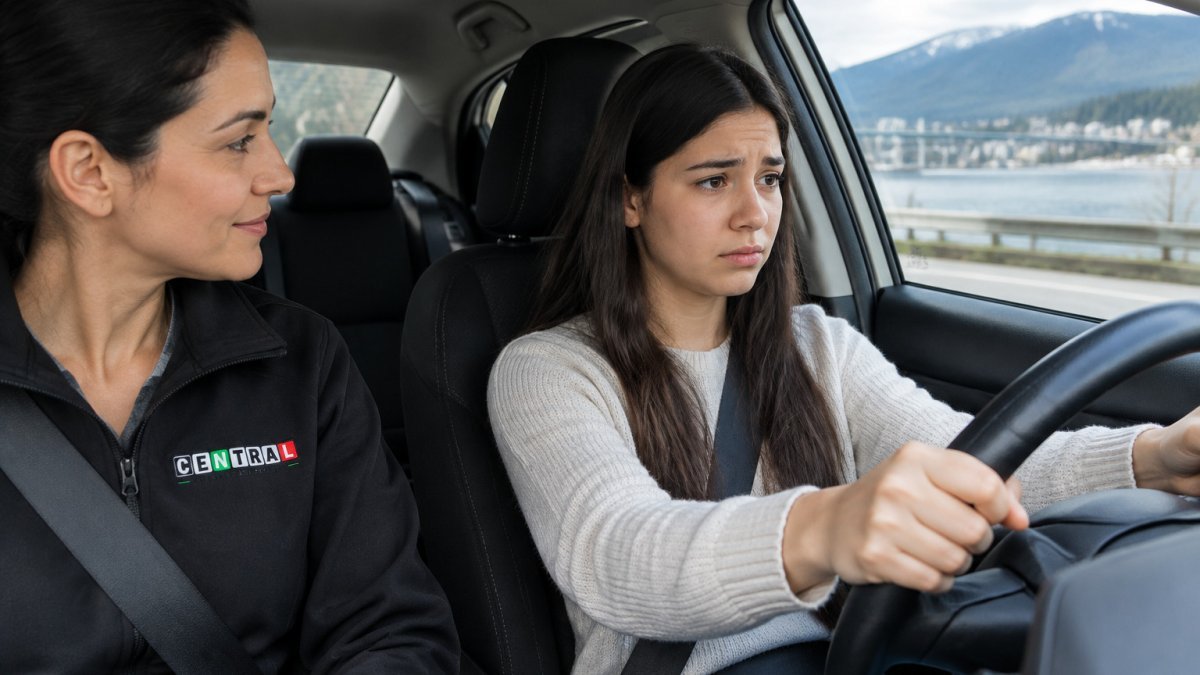
Nervous new drivers in Port Moody should start with low-pressure practice on quiet residential streets, one skill per session, outside rush hour. Practise two to three times a week for 45 to 60 minutes, and advance only when a skill is done calmly without prompting. A patient, certified instructor and a free in-person assessment help target the skills you actually need.
- Pick a practice time outside school and commuter rush.
- Practise two to three times a week for 45 to 60 minutes per session.
- Advance only when a skill is done calmly, without prompting, twice in a row.
- Hold at least a three-second following distance in good weather.
- Central Driving Academy offers a free in-person assessment and teaches in English and Farsi.
Table of Contents
- Start Small: Low-Pressure Practice on Quiet Port Moody Streets
- How to Overcome Driving Anxiety Behind the Wheel
- Master the Basics: Steering, Braking, and Lane Control
- How Often Should New Drivers Practice?
- Your Beginner Driving Practice Checklist
- Why a Patient Driving Instructor Changes Everything
- Tackling Port Moody’s Trickier Roads and Conditions
- Book Your Free Assessment with Central Driving Academy
- Frequently Asked Questions
Start Small: Low-Pressure Practice on Quiet Port Moody Streets
Nervous new drivers in Port Moody do best when the first lessons happen somewhere boring.
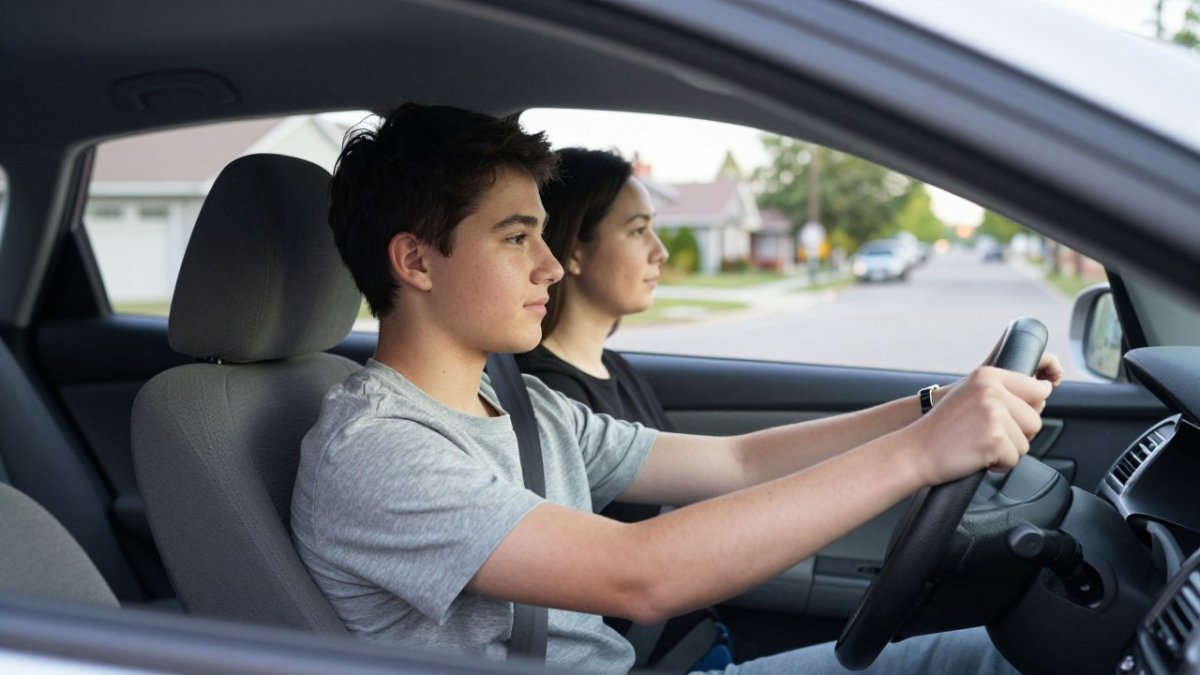
At Central Driving Academy, we build early lessons around streets where a learner can focus on one skill at a time.
Here is what the first sessions should look like:
- Pick a time outside school and commuter rush
- Drive the same short loop twice, not a new route each time
- Practise one skill per session: steering today, braking tomorrow
A common mistake is booking a first lesson on a busy arterial road. It feels brave, but it can make the lesson harder than it needs to be.
How to Overcome Driving Anxiety Behind the Wheel
Driving anxiety is a normal stress response to an unfamiliar task, not a sign you are bad at driving. It fades with repetition, calm guidance, and a few in-the-moment techniques. Most learners feel it most in the first ten minutes of a session.
In-the-Moment Techniques for Panic and Nerves
When nerves spike mid-drive, slow everything down on purpose:
- Breathe out longer than you breathe in. Four counts in, six counts out, three times.
- Loosen your grip. Relaxed hands steer more smoothly than white-knuckle hands.
- Name what you see. Say “stop sign ahead, clear intersection” out loud. It pulls your focus back to the road.
- Drop your speed. Ten kilometres under the limit is legal and gives you reaction time.
- Pull over if you need to. A safe stop on a side street is always allowed.
Anxiety is often highest before you start, not during. A short calm-down in the parked car before you turn the key can help. If nerves are stopping you from booking at all, this guide on how to overcome driving anxiety as a beginner walks through it step by step.
Master the Basics: Steering, Braking, and Lane Control
Smooth inputs matter more than fast ones. A beginner driver who steers, brakes, and accelerates gently looks confident because the car looks calm. Jerky control makes passengers nervous and usually signals tension, not skill.
Work through these fundamentals in order:
- Steering: hands at nine and three, small corrections, look where you want to go
- Braking: squeeze, do not stab, and start earlier than feels necessary
- Acceleration: press the pedal like there is an egg under your foot
Mirror checks and blind spots belong in every session, not a separate one. Build the habit early: mirror, signal, shoulder check, move. Observation only becomes automatic through repetition.
How Often Should New Drivers Practice?
New drivers should practise two to three times a week, for 45 to 60 minutes per session. Short, frequent practice beats one long weekend drive. Skills fade fast in the first months, and a learner who drives twice a week holds progress far better than one who drives twice a month.
A practical rhythm for most learners:
- Two short weekday sessions on familiar routes
- One longer weekend session on a new road type
- One lesson with a patient instructor each week
Rest days matter too. A tired learner makes worse decisions and remembers less. If you are planning a full lesson schedule, this guide to driving lessons for nervous beginners covers how to structure it around school or work.
Progression Criteria: When to Move On
Do not advance because the calendar says so. Advance when the learner can do the current skill calmly, without prompting, twice in a row. If you had to say the instruction out loud, the skill is not yet automatic. Use these gates:
- Before leaving quiet streets: complete stops at every stop sign, smooth braking to a full stop, and steady speed within a few kilometres of the limit.
- Before low-traffic arterials: mirror-signal-shoulder-check sequence performed without reminders at every lane change and turn.
- Before busier routes: three-second following distance held in light traffic and correct gap selection on at least three merges.
If a gate is not met, repeat the previous week rather than pushing forward. Some people need two weeks on week one’s skills, and that is fine.
Structuring a Single Session
A 50-minute session works well in four parts: five minutes of parked-car setup and a calm-down, ten minutes on the day’s single skill on a quiet loop, twenty-five minutes applying that skill on a slightly harder route, and ten minutes returning to an easy loop to end on a successful repetition.
How Supervisors Can Help Without Adding Pressure
The person in the passenger seat shapes the session as much as the learner does. Calm communication, useful feedback, and avoiding pressure are skills in their own right.
- Give directions early. Say “turn right at the next intersection” well before the turn, not at the corner.
- Comment on what went well first. One specific praise (“that stop was smooth and complete”) lands better than a general “good job.”
- Correct one thing at a time. A list of five corrections in one session teaches nothing.
Watch out: a supervisor who sighs, gasps, or repeats instructions louder does more damage than a difficult road, because the learner starts driving to manage the passenger instead of the traffic.
In-the-Moment Reset After a Mistake
Mistakes are part of practice, and how they are handled matters more than the mistake itself. When something goes wrong, pull over safely, put the car in park, and take three slow breaths. Name one thing that went well and one thing to repeat next time, then restart only when the learner is ready.
Your Beginner Driving Practice Checklist
Use this checklist to track progress instead of guessing. Tick each item only when you can do it calmly, without prompting.
- Start the car, adjust seat and mirrors, release the brake smoothly
- Drive a quiet residential loop with steady speed control
- Stop at a stop sign, complete stop, then proceed
A Structured First-Weeks Practice Plan
| Week | Focus | Where | Goal |
|---|---|---|---|
| 1 | Steering, braking, speed control | Quiet side streets | Calm, smooth inputs |
| 2 | Turns, stop signs, mirror checks | Low-traffic intersections | Complete observations every time |
| 3 | Lane control, following distance | Familiar main roads | Hold a lane without drift |
| 4 | Traffic, merging, hazard awareness | Busier routes, off-peak | Anticipate, not react |
| 5 | Rain or low light, test routes | Mixed conditions | Stay calm when it gets harder |
Why a Patient Driving Instructor Changes Everything
A patient instructor can make a lesson feel more manageable. Calm guidance can help ease anxiety while you learn. An instructor who sighs or grabs the wheel teaches a learner to fear mistakes, and fearful learners stop trying new things.
What to look for:
- An instructor who explains why, not just what
- Someone who lets you make a small error and then fix it
- A clear lesson plan you can see before you start
At Central Driving Academy, we teach in English and Farsi, which matters for newcomers learning driving terminology from scratch. If finding the right fit is your worry, here is how to find patient driving instructors, and this breakdown of the benefits of private driving lessons for nervous drivers explains why one-on-one time helps anxious learners most.
Tackling Port Moody’s Trickier Roads and Conditions
Local roads reward drivers who plan ahead. The area has hills, curves, rail crossings, and waterfront stretches where pedestrians and cyclists appear without warning. A learner who has practised these spots with calm guidance handles them far better than one who meets them cold on a test day. Build a route ladder and climb it one rung at a time.
A Route Ladder for Local Practice
Start on the quietest rung and only move up when the current rung feels boring. Learners who repeat a route until it is dull progress faster than learners who chase new scenery every session.
- Quiet residential loops. Grid streets with four-way stops and low parked-car density. Goal: smooth starts, complete stops, steady speed. Repeat the same loop twice per session.
- Low-traffic arterials off-peak. Two-lane roads with signalized intersections and dedicated turn bays. Goal: lane discipline, signal timing, and mirror-shoulder-signal sequences. Practise mid-morning or early afternoon, not at school dismissal.
- Hilly residential grades. Steep streets with parked cars on one side. Goal: hill starts without rollback, controlled descents using engine braking rather than riding the brake, and pulling over safely on a grade. On a descent, select a lower gear or use light, steady brake pressure; stabbing the brake mid-curve unsettles the car.
- Waterfront and park edges. Roads with crosswalks, cyclists, and parking-lot exits. Goal: scanning far ahead, covering the brake when a pedestrian approaches a crosswalk, and giving cyclists a wide berth. Reduce speed before the crosswalk, not at it.
- Rail crossings and industrial edges. Goal: full stop where required, look both ways, and cross without hesitation once clear. Do not stop on the tracks; wait behind the line until there is room on the far side.
- Busier routes and merging. Off-peak only at first. Goal: gap judgment, shoulder-check timing, and matching speed to traffic before merging rather than after.
Watch out: a learner who advances to a busy arterial before mastering complete stops will spend the whole session managing traffic instead of the car, and the anxiety that follows can set progress back weeks.
Rain, Darkness, and Low Visibility
Weather adds a second layer and should be introduced deliberately rather than by accident. Rain cuts visibility and stretches braking distance, so reduce speed and leave more room. Darkness is harder again.
- First rain session: familiar residential loop, daylight, light rain. Goal: wipers, headlights, and longer following distance without panic.
- Second rain session: the same loop plus one arterial. Goal: smooth braking on wet pavement and reading reflections on the road surface.
- First darkness session: familiar route at dusk, before full dark. Goal: headlight timing, dashboard familiarity, and reduced glare sensitivity.
Defensive driving in these conditions is a skill you build, not a talent you are born with. If a session goes badly, end it on a successful repetition of an easier skill and debrief in the parked car rather than pushing through to finish the planned route.
Book Your Free Assessment with Central Driving Academy
Nerves are the most common thing we see in a first lesson, and they are the easiest thing to work around.
If you are ready to start on beginner driving lessons in Port Moody, beginner driving lessons in Port Moody shows what the first sessions cover and how to book.
Get started with Central Driving Academy and turn nervous first drives into calm, steady ones.
Nervousness behind the wheel is not a permanent trait.
Frequently Asked Questions
Is it normal to feel nervous when learning to drive?
Yes. Almost every learner feels some anxiety behind the wheel, especially on the first few drives. Nervous new drivers often worry about stalling, misjudging a turn, or holding up traffic. That nervousness usually fades with repeated, low-pressure practice on familiar roads. If anxiety is stopping you from getting in the car at all, a patient instructor can help you break the process into smaller, manageable steps so each drive feels achievable.
How often should a new driver practice to build confidence?
Short, frequent sessions work better than one long weekly drive. Aim for two to three practice sessions a week of 30 to 45 minutes each in the early weeks. Consistent repetition helps skills like mirror checks, speed control, and smooth braking become automatic. As confidence grows, extend sessions and add busier roads. Keep a simple log of what you practiced so you can see progress and decide what to work on next.
What should I do if I panic while driving?
Ease off the accelerator, signal, and pull over safely as soon as you can. Put the car in park, take slow breaths, and give yourself a minute before continuing. Panic usually peaks and passes quickly. Practicing calm breathing during low-stakes drives makes it easier to use the same technique in traffic. A patient driving instructor can also rehearse stressful scenarios with you in a controlled way so they feel less overwhelming.
How can a driving instructor help with driving anxiety?
A patient driving instructor gives calm, clear guidance without raising their voice, which keeps your stress level down while you learn. Central Driving Academy offers a free in-person assessment so you can meet an instructor and discuss your concerns before booking lessons.
